

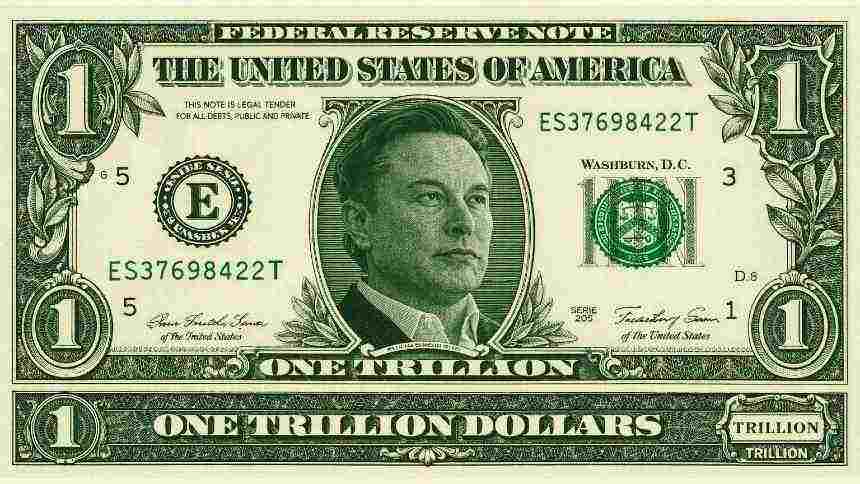

Entrepreneur Elon Musk has become the first person in the world to hold (at least on paper) the title of trillionaire, an impressive level of wealth far exceeding the GDP and market value of many companies.
SpaceX debuted on Nasdaq this Friday, June 12th, after pricing its IPO at $135 per share on Thursday, giving the company a market value of $1.8 trillion. In the first few hours, Musk's company's shares jumped almost 30%, raising its valuation to over $2 trillion.
Forbes calculations indicate that the transaction increased Musk's net worth by $188 billion, to $982 billion – this before today's trading surge. This consolidated his position as the world's richest man by a wide margin, a position he has held for some time – in second place, far behind, is Larry Page , co-founder of Google , with a net worth of $294.3 billion.
If being a billionaire is already beyond comprehension, being a trillionaire takes it even further. While a billionaire would need to spend US$27 million a day for 100 years, without ever replenishing their assets, to run out of money, according to Bloomberg calculations, a trillionaire goes far beyond that.
If Musk spent $1 million a day, it would take him 2,740 years to "burn through" his $1 trillion, according to the NGO Oxfam . According to the organization, reaching $1 trillion would mean Musk's wealth grew by more than $550 billion in the last year, equivalent to an average of over $1 million per minute.
The value is gigantic from any perspective. It is greater than the GDP of 198 countries, according to the ranking compiled by the World Bank in 2024. If Musk were a country, he would be the 20th largest, ahead of names like Switzerland , Argentina , and Denmark .
With a net worth of $1 trillion, he would be richer than the poorest 46% of the world's population—or 3.8 billion people—combined, according to Oxfam.
It's an amount that allows you to buy practically anything. With that value, Musk could acquire the entire bottom portion — approximately 33% — of the S&P 500 , an index that tracks the performance of the 500 largest publicly traded companies listed in the United States and which totals US$67 trillion in market capitalization.
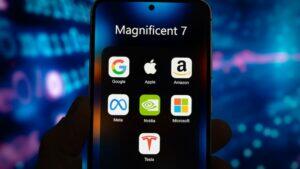
If he wants to target the largest companies in the index, he can buy 20% of Nvidia , valued at US$5 trillion, or 23% of Microsoft .
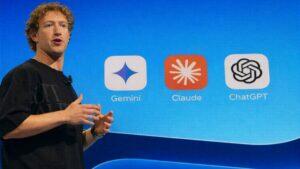
It could also definitively end the disputes with Sam Altman and take over all of OpenAI , valued at US$852 billion in its most recent funding round in March. Anthropic would cost more, having been valued at US$965 billion in May.
Looking at "our own backyard," Musk could buy the entire Brazilian stock exchange , currently valued at US$938.1 billion, according to calculations by Elos Ayta. And he could even buy the Chilean and Mexican markets together, with change left over – the Chilean stock exchange is worth around US$244.7 billion, while the Mexican one totals US$638.6 billion.
If he were feeling "bold," Musk could use $1 trillion to buy 2,000 units of Jeff Bezos ' $500 million Amazon yacht. Or he could acquire Coca-Cola , valued at $330 billion, and pay for a 12-pack of cans for all 8.3 billion inhabitants of the planet, considering that the pack costs, on average, $9 in the United States.
In this spirit of "camaraderie," he could help soccer fans circumvent the costs of the 2026 World Cup , the most expensive in history. With $1 trillion, he could distribute two of the cheapest tickets, costing $60, to the entire global population.