

The contradictions surrounding the electricity sector are gaining new dimensions even when the federal government adopts correct measures that, strictly speaking, should solve some of the chronic problems plaguing the segment.
The paradox, this time, involves the regulation of Battery Energy Storage Systems (BESS) earlier this month.
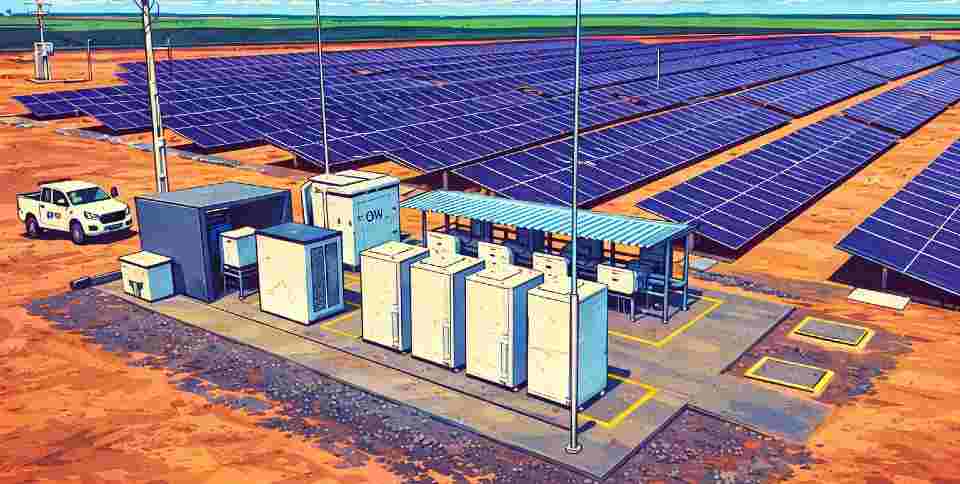
Presented as a solution to one of the system's major bottlenecks – the intermittency of solar energy – BESS is expected to generate up to R$77 billion and reach 72 GWh of installed capacity by 2034, according to estimates by ABSAE, an association of companies in the battery sector. On the other hand, it will feed the federal government's insatiable thirst for revenue.
What would be a solution to reduce cuts in renewable energy generation during the day so as not to overload the system, the so-called curtailment – since the batteries store the surplus produced throughout the day and release it when the system needs it most, at night – part of its profitability is likely to be lost due to the maintenance of import taxes on equipment, most of which comes from China, with rates of 70%.
The contradiction gains relevance due to the cascading effect it is expected to produce. On the same day that Aneel – the regulatory agency for the electricity sector – issued the BESS regulation, the federal government announced the guidelines for the first auction of exclusive battery capacity reserves, scheduled for December 2026, aimed at ensuring energy security and reducing the use of thermal power plants during peak hours, after 6 pm, when solar generation decreases and consumption increases.
In practice, besides deterring investors, maintaining the 70% tax policy will be priced into the revenue of the auction projects and, therefore, passed on to the energy consumer. In other words, electricity bills are likely to increase again.
“There is a lack of systemic government vision to transform energy into development, integrating the electricity, agriculture, and mining sectors, the main beneficiaries of the mass adoption of energy storage batteries,” says Donato Filho, executive director of the consulting firm Volt Robotics .
According to him, public policies should encourage and facilitate the installation and development of batteries, instead of creating tax barriers, especially when batteries prevent the waste of clean energy. "The technology is rapidly improving and becoming integrated into electrical systems, with a 30% price reduction in the last year," Donato continues.
Given the negative impact of curtailment , which forces the National Electric System Operator (ONS) to cut more than 20% of renewable energy generation, the expert believes that the incorporation of batteries in the electricity sector tends to be faster than that of solar energy itself, due to greater flexibility and multiple uses beyond generation.
To get an idea of the impact of the storage system on bottlenecks in the electricity sector, a simulation by Volt Robotics indicates that, with the addition of 10 gigawatts (GW) of batteries to the electrical system, curtailment drops to less than 5%. Last year, the consultancy estimated losses of R$ 6.5 billion due to curtailment at the 1,500 centralized renewable power plants, from small to large, under the supervision of the ONS (National System Operator).
In addition to covering the intermittency of solar and wind power plants, batteries help reduce tariffs – charging when there is an oversupply of energy and discharging during peak hours – and stabilize the electrical grid by correcting voltage and frequency fluctuations.
Cost varies.
The cost of a battery storage system varies considerably depending on the size and type of application. In residential installations, investments typically start at around R$ 30,000 and can reach R$ 90,000. Projects aimed at businesses, with greater capacity and more complex engineering, easily exceed R$ 600,000.
In the case of large-scale systems used to alleviate peak demand—so-called peak shaving —monthly savings can range from R$8,000 to R$15,000, allowing for a return on investment within an estimated period of two to four years. In the market, the initial cost is usually calculated based on installed capacity, currently varying between R$1,100 and R$1,900 per kWh.
Businessman Sérgio Jacobsen, CEO of Micropower Energy , in the BESS sector, states that reducing the tax would help both the auction and consumer adoption, accelerating the development of the storage ecosystem. According to him, the 70% rate is considered absurd and counterproductive. "Strictly speaking, 70% times zero is zero; without a market, there is no revenue," he says.
“Each megawatt ( MW ) of battery power can prevent the construction of additional MWs of generation and transmission that remain idle for 20 hours a day — without emitting CO₂ and without depending on imported fuel subject to geopolitical turbulence,” he adds, referring to the contracting of thermal power plants to provide security to the system and compensate for the intermittency of renewable plants.
Jacobsen asserts that batteries should no longer be considered an experimental technology, citing as an example the world's largest solar energy storage project, currently under construction in Abu Dhabi. "It involves 5 GW of solar panels integrated with batteries, providing 1 GW of firm power, 24 hours a day, at an estimated cost of US$70/MWh, competitive with new gas-fired plants, which according to Lazard Bank cost between US$48 and US$109/MWh," he states.
He predicts market expansion in Brazil with energy storage. "The supply of renewables and the competitiveness of continuous supply, with 24-hour energy, should grow, reducing systemic costs and even end-of-day tariffs," he says.
Your company – which has industry giants like Equinor, Siemens, and Comerc as partners – offers the BESS as a Service system, providing clients, from agribusiness to Vale, with a solar power plant and battery package to reduce energy costs.
In agriculture, for example, the impact is significant. "We have a client in western Bahia, an agribusiness, that has an internal electrical grid of 100 km, the same distance as its water pipeline; both power the farm's irrigation with solar energy and batteries, which was previously done with diesel generators," he says.
Auction under scrutiny
The first capacity reservation auction focused exclusively on BESS systems was divided into two.
One of the auctions will be held on December 2nd and will be for projects that meet minimum nationalization requirements defined by BNDES. Two days later, on December 4th, the other auction will take place, open to other storage systems, more geared towards foreign companies.
The MME guidelines establish that the winning projects will have capacity reservation contracts with a duration of 15 years and the start of supply on August 1, 2028.
The batteries must be capable of supplying the contracted power for four consecutive hours per complete cycle, and may perform up to two cycles per day, limited to 366 cycles per year. The ONS (National System Operator) may, however, dispatch the systems for up to 12 hours.
Donato, from Volt Robotics, says that the proposed model makes the battery asset available to the system, with the ONS (National System Operator) determining when to charge and discharge it. The entrepreneur receives a fixed income contingent on performance; if parameters are not met, the "monthly payment" is cut off.
“This reduces the entrepreneur's role to asset management, similar to a transmission company, and limits the capture of value from multiple services that the battery could provide,” he laments, comparing the model to a smartphone solely for calls, which dispenses with the technological potential of applications such as WhatsApp, for example.
“Batteries could provide price arbitrage, reduce curtailment , decrease demand on the grid, and provide ancillary services such as voltage regulation and outage response,” he says. “Even so, I consider it better to have a first auction, even an imperfect one, than to have none at all.”
The Volt specialist also has reservations about dividing the contracting into two blocks: "By segmenting the demand into lots for national and imported content, competition is diluted, as there are fewer players in each segment and fragmented offers," he states, noting that this model can increase costs due to less competition.
Jacobson also has doubts regarding the two auctions. “The government has signaled up to 2 GW in the auction, but there is a lack of clarity about the division of power between domestic and non-domestic products,” he warns. “If domestic power supplies all the capacity, will there still be an auction for imported power? Will there be separate quotas or a single ceiling with priority? This definition impacts suppliers and the strategy of entrepreneurs,” he adds.
The dual announcement of regulations and an auction by the Ministry of Mines and Energy (MME) has encouraged manufacturers interested in setting up production lines for energy storage batteries in the country, with projected investments of R$ 8 billion from industry giants such as WEG , Moura, the Swedish company Anadox, and Brasol.
Another investment opportunity will come from the three financing lines offered by BNDES , totaling R$ 54 billion, which are encouraging both companies interested in participating in the auctions and in acquiring equipment and expanding their market presence.
"It is important to clarify that BNDES does not have a pre-defined budget for battery energy storage systems, but rather for each of the Bank's financing instruments," states the BNDES press office in a note sent to NeoFeed .
"Thus, for 2026, the Climate Fund has a budget of R$ 27 billion; the Sovereign Brazil Fund, R$ 15 billion; and the More Innovation Fund, R$ 12 billion, totaling R$ 54 billion," he adds, referring to the names of each financing line, to which, depending on the project, the entrepreneur can apply for access.