


Brasilia — Behind the heated debate surrounding the renegotiation of billions of dollars in agribusiness debt, which achieved a victory in this area this week in Congress, a political war between the government and the sector has been drawing attention behind the scenes in the federal capital and is already taking on inevitable electoral overtones.
Traditionally on opposite sides of the political spectrum, the agricultural sector (associated with the right wing and Bolsonaro's ideology) and the current Workers' Party administration—especially the economic team—have been waging daily battles over rural debt, which could result in fiscal losses for public coffers and even end up in the Supreme Federal Court (STF).
NeoFeed has learned that, after several meetings between Finance Minister Dario Durigan and members of the agribusiness caucus in Congress, the trend is that lawmakers will want to resolve the issue through a vote, without any new significant agreement.
Durigan stated this Friday, June 12th, on a program on National Radio, that he will remain in dialogue with the Legislative branch, seeking conversations with the presidents of the Chamber and Senate, but that he is already considering appealing to the Supreme Court.
"I fear that in our eagerness to champion a cause championed by certain sectors that are committed to the elections of some parliamentarians, we might harm the agribusiness sector itself," Durigan stated, expressing concern for the agribusiness industry.
The claim is that the renegotiation of rural debts, which involves a fiscal cost of up to R$ 140 billion over three years, according to the National Treasury, violates the Fiscal Responsibility Law (LRF), as it creates expenses without providing equivalent space in the Budget.
Furthermore, the Ministry of Finance included the issue on a list of nine potentially controversial bills currently being debated in Congress, with the potential to generate a fiscal impact of R$ 111 billion per year on public coffers.
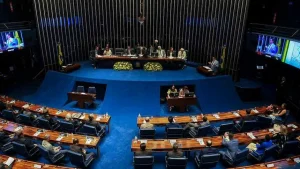
On Wednesday, June 10th, the Senate approved a bill that renegotiates debts of rural producers, using resources from the Pre-Salt Social Fund and constitutional funds for debts incurred only in the North and Northeast regions. The agribusiness sector estimates the amount to be R$ 170 billion. The Treasury Department has taken a radically opposed stance.
In an interview with NeoFeed , former Minister of Agriculture and Senator Tereza Cristina (PP-MS), one of the leading figures in the sector in Congress, considers the moment to be "serious" and "complicated." She also acknowledged the strong political and electoral backdrop surrounding the issue.
However, after a series of meetings with the Treasury and the banks, she believes that the government did not have a real understanding of the complexity of the matter.
“Of course, there’s the electoral issue. The government itself has given several benefits, outside the fiscal ceiling, to other categories. Now, it may look at our sector and say: what political gain will I have with this public that has always been hostile to the PT? I would see it differently. But of course, many people think that way,” she said.
According to her, the bill, which was even reported on by the pro-government senator Renan Calheiros (MDB-AL), was not conceived to take advantage of an election year, but rather to solve a specific problem in agriculture. "It's not money given by the government; it will go back [to the Treasury]."
The political conflict between the government and agribusiness is expected to have repercussions even on the 2026/27 Harvest Plan, a rural credit program with government-subsidized interest rates, which will soon be launched by the Presidential Palace and will take effect from July 1st, the start of the next agricultural calendar in the country.
“And now we’re in a bottleneck: many people will be left behind and won’t be able to secure financing for the next harvest because they don’t have collateral to offer. If we don’t resolve the past, we could have the largest harvest plan in history, but we won’t have borrowers,” he warned.
The rural caucus has been reacting harshly and has pointed to the government as an opponent of the sector. In a statement released in recent days, the Parliamentary Agricultural Front (FPA), as the caucus is called, raised its tone: "the federal government intensified, this week, an offensive against measures to support agricultural production in the country."
The backdrop to the note was President Lula's veto of a bill known as the "Seasonal Workers' Bill." The proposal, approved by Congress, stipulated that seasonal workers [those who work seasonally in agricultural harvests] enrolled in the Bolsa Família program would not lose their benefits while they were temporarily employed during the harvest season.
According to the FPA, rural insurance and debt renegotiation in the sector also suffered "attacks." The government also announced a freeze of approximately R$ 461 million in the budget allocated to the Rural Insurance Premium Subsidy Program (PSR), almost half of the planned resources.
"The freeze repeats the drama observed last year, in which more than R$ 500 million were frozen, compromising insurance coverage and reaching its lowest level since 2015," says the statement from the parliamentary group.