


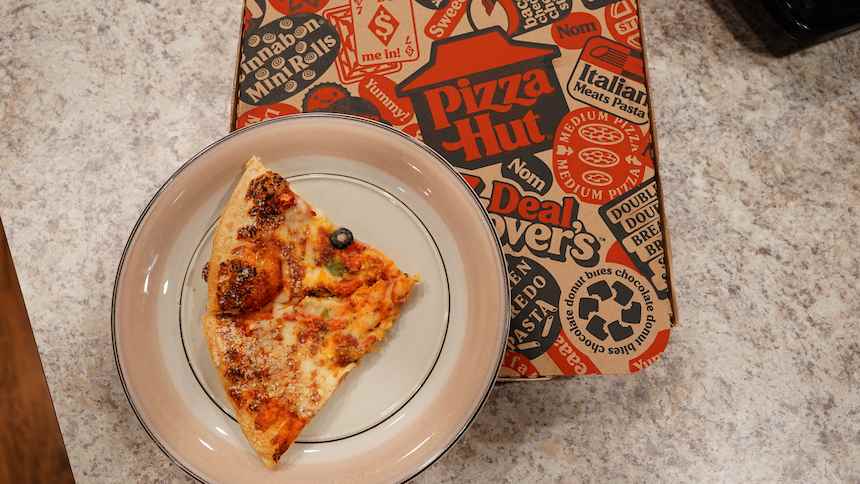
Yum Brands announced the sale of its Pizza Hut operations in two "slices," totaling US$2.7 billion. The private equity firm LongRage Capital will pay US$1.5 billion for the market outside of China. In China, the pizza chain will remain with Yum China Holdings for US$1.2 billion.
At the end of last year, the company announced it was conducting a strategic review of Pizza Hut's business after the chain negatively impacted its overall results. The company's other brands, such as Taco Bell and KFC , have performed better in recent years.
The expectation is that the negotiations will be effectively concluded in the third quarter. During a meeting with investors, Yum Brands executives said that the transactions will allow the company to better focus on its fastest-growing brands and benefit investors.
The financial market reacted positively to the plan presented by the company on Tuesday, June 16th. Around 10:30 AM (local time), Yum Brands shares were up 3% on the New York Stock Exchange.
Since Chris Turner took over as CEO of Yum! last October, he has stated that he wants to sell Pizza Hut. The chain's sales in the United States have been declining for approximately two years.
“Under the management of LongRange and Yum China, Pizza Hut will be well-positioned for future growth, with owners who bring deep experience in the restaurant industry,” Turner said in a statement announcing the deal.
In the negotiation with LongRange, the company may receive an additional payment of US$75 million by 2030. In both transactions, Yum expects to receive US$2.3 billion in net revenue after payments of taxes and fees related to the operations.
Barclays and Goldman Sachs acted as financial advisors to Yum. The law firms Weil, Gotshal & Manges LLP and Mayer Brown LLP participated as legal advisors to the company.
In the United States, Pizza Hut is the second-largest pizza chain, behind Domino's , with approximately 6,300 stores and revenue of US$5.1 billion last year, according to market research firm Technomic. Worldwide, Pizza Hut operates approximately 20,000 stores.
In Brazil, where it has 230 restaurants, the chain is operated by the International Meal Company ( IMC ), which also leads the business of brands such as KFC, Frango Assado, Viena, among others. Pizza Hut has been in Brazil since 1989.
Yum Brands announced it will close approximately 250 underperforming stores in the United States this year. Even so, the acquisition relies on the brand's relevance and the potential for business expansion following the purchase.
“Pizza Hut is a beloved global brand with a rich history and a loyal customer base that few brands can match,” Bob Berlin, founder and managing partner of LongRange, told the Wall Street Journal .
Pizza Hut's business has fared better in China, where the chain is the country's largest casual dining restaurant brand, with sales of US$2.3 billion last year. The company has 4,375 restaurants in China.
Yum China, which operates as a separate company, stated that acquiring Pizza Hut's business in the country will help the company develop its menu, stores, and operations.
In addition to Pizza Hut, Yum Brands also owns the global operations of the KFC fried chicken chain and the Taco Bell Mexican food chain.
In Brazil, NeoFeed revealed in November that Yum Brands was taking over the local operation of Taco Bell, after a decade of management by the Sforza holding company, owned by businessman Carlos Wizard, which brought the fast-food chain to the national market. Furthermore, it also announced Tito Barroso as the CEO of the chain in Brazil.
Earlier this year, LongRange closed a deal to acquire the 24 Hour Fitness gym chain. The company also owns Batesville, a manufacturer of coffins and funeral urns.
Over the past 12 months, Yum Brands shares have risen 5.3%. In 12-month terms, the appreciation is 12.2%. The company has a market capitalization of US$43.9 billion.