

The Federal Reserve's (Fed) decision to maintain interest rates on Wednesday, June 17, was the first under Kevin Warsh's leadership. According to Tony Volpon, adjunct professor at Georgetown University and former director of international affairs at the Federal Reserve between 2015 and 2016, the arrival of the economist nominated by President Donald Trump should mark a new era at the American central bank.
According to Volpon, the main change lies in the Fed's communication, with less emphasis on predictive tools such as forward guidance and dot plots (quarterly projection reports). While acknowledging the usefulness these tools had in the past, Volpon believes they are no longer justified in the current environment of more persistent inflation and interest rates far from zero.
"I think central banks have overused these alternative tools. They are no longer necessary in a world where interest rates are no longer zero, and there will be a course correction, more than anything else," Volpon states in an interview with NeoFeed .
The former Central Bank official also believes that Warsh's stance, which kept interest rates unchanged between 3.5% and 3.75%, proved more hawkish than expected — especially considering the pressure from the White House for lower rates .
Although he gave less weight to the dot plot projections, which predict at least one interest rate hike by the end of the year, Warsh reinforced his commitment to returning US inflation—currently at 3.8% and 3.3% in its core—to the 2% target. After Wednesday's decision, investors increased their bets on interest rate hikes, now pricing in more than a 50% chance of at least two increases by December.
According to Volpon, the new Fed chairman's stance helped to allay fears about the institution losing its independence, which had been widely discussed during Trump's public attacks on his predecessor, Jerome Powell .
"Once he's in, he has autonomy. And Warsh doesn't seem like someone who's going to ruin his reputation trying to please Trump," he says.
While he sees less risk of interference in the Fed, Volpon believes that the Monetary Policy Committee has lost credibility by cutting the Selic rate by 0.25 percentage points this week for the third time in a row, bringing the rate to 14.25%.
"Traditionally, if the Central Bank's inflation projections are rising over a relevant period—that is, moving away from the target—you should, at the very least, not cut interest rates." His expectation is that the Copom (Monetary Policy Committee) will provide better explanations for the cut in the minutes of the decision, which will be released on Tuesday, June 23.
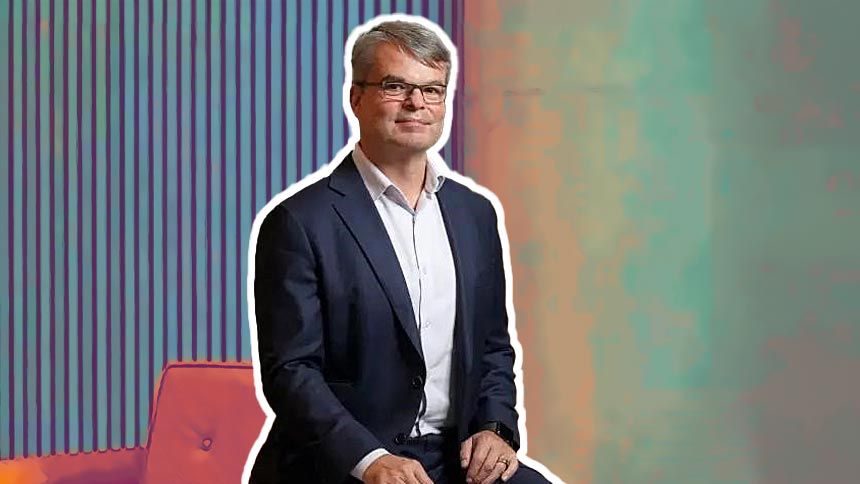
"Their lives are complicated because, in truth, they shouldn't have cut interest rates," says Volpon. "They're going to have to explain this decision very well before we can understand what they're going to do [with interest rates]."
Below are the main excerpts from the interview:
What impressions did Kevin Warsh leave behind with his first decision as chairman of the Fed?
We already knew that Warsh has a reform agenda. He believes – and I partly agree with him – that this move to expand the Fed's areas of operation was an attempt to compensate for the lack of power of interest rate policy during times of crisis. We spent a long period with the Fed Funds rate at zero, close to zero, and Ben Bernanke [Fed chairman between 2006 and 2014] resorted to two alternative policies: forward guidance and quantitative easing (QE), which is the use of the Fed's balance sheet.
"This move to expand the Fed's areas of operation was an attempt to compensate for the lack of power of interest rate policy during times of crisis."
Has the world changed?
We no longer live in that world of zero interest rates. Since Covid-19, inflation has consistently remained above the targets of several central banks, and even six years later, few have managed to bring it back down. Warsh's point—and I agree with him—is that we don't need to use these tools as extensively as we did back then, because today we live in a world where traditional monetary policy must return to function, due to the fact that we are not going to hit the zero lower bound .
How should he implement this new approach at the Fed?
The way he's trying to do this is correct. Since he only has one vote, he launched five working groups to study these issues consistently, bringing in input from academia. We'll see how this work develops. He wants to have a debate. There are people within the Fed who won't agree with his positions. But, at the end of the day, I think some of these reforms will be adopted in some way.
Were there any surprises in his first decision as Fed chairman?
He was more hawkish than the market expected, given that he was appointed by Trump. From an inflation standpoint, this was welcome. It hurt the market a bit, but the truth is that American inflation is much closer to 3% than 2% [per year]. He, at least, made it clear that, for him, inflation is 2%.
Regarding his decision not to participate in the dot plot , to abstain, how is this viewed? Can we simply ignore this document?
It's consistent with what he's been advocating for years. It's no secret that he doesn't like this type of forward guidance . He believes the concrete predictive capacity is very small—and, let's be honest, it's true. In a way, it's as if he's telling the market: " make up your mind ." So, everything within his power, he did. I don't know what will happen with dot plots , because that will be part of one of these working groups, but it will be part of the discussion.
"He [Kevin Warsh] thinks that the concrete capacity for prediction is very small — and, let's be honest, it's true."
The idea is to gain a certain freedom to react according to the data, not to be stuck with what was said in the previous decision?
For him, the problem with forward guidance is that you never know: it's a mix of prediction with some kind of implicit promise. And, from his point of view, you'll end up breaking those promises many times. The models really can't predict the future with much accuracy. So, it's better to react to what's happening than to keep making promises about how you're going to react in the future. That's his point of view.
How is this evaluated by monetary policy academics?
This viewpoint is a minority one within academia. A large part of it believes that forward guidance is, in fact, a good tool. Warsh comes from a more liberal school of thought, even Austrian in a certain sense. Because the Austrians always say that this is why planning regimes end up failing, because you can't predict what will happen tomorrow. That's his point of view. I don't think it's the majority or consensual view among monetary policy scholars, if you look at the most prominent cases today. But anyway, he's there. He was put in place by Trump and he's going to kind of fight for this point of view.
But what would be the main argument of those who defend maintaining, or at least using, forward guidance as an effective tool in monetary policy?
This comes from an academic tradition that began in the 1970s and heavily emphasized the importance of expectations. This alternative school of thought, largely centered at the University of Chicago, believed that agents are rational and, within this collective understanding, you can achieve equilibrium without state intervention. And this became mainstream .
Why?
In the 1990s, inflation targeting began to emerge, stemming from this vision. The idea was: if you, as a central bank, announce that you will act to bring inflation to a certain level, and if you have credibility, agents will act in such a way that they will actually deliver that result—potentially even without you doing anything. Theoretically, of course: obviously no central bank has 100% credibility, but if it did, you could achieve the result without intervening in monetary policy. And, in the 2008 crisis, when interest rates went to zero, forward guidance also stemmed from this idea: if you, as a central bank, promise to act—if you tell the market, "look, until this inflation rises, I won't raise interest rates"—you can impact the term structure of interest rates and have an additional source of stimulus to the economy, impacting, for example, the 5- or 10-year rate. If I manage to lower a longer-term rate, I'm adding more stimulus than if I only focused on overnight rates .
"It's obvious that no central bank has 100% credibility, but if it did, you could achieve the result without intervening in monetary policy."
And is that a problem?
One of the problems is not knowing the future. So, you promise you'll do something and then you don't. And we saw that a lot in the post-Covid era. There was that inflationary surge, and the Fed took almost two years to raise interest rates because it misdiagnosed the source of that inflation—it thought it was a temporary thing that would end quickly with the end of Covid. It turned out that wasn't true, and they had to scramble to control inflation.
Has this policy lost its effectiveness with the loss of credibility of the Fed due to projection errors in recent years?
Well, that's part of what Warsh is saying. If they keep talking a lot of things and those things don't happen, they end up undermining the institution's credibility.
This also makes forward guidance inefficient...
Yes. His point of view is that it's better not to make promises or signals. He acts according to the data he has at hand today, since his predictive capacity is very limited. I think we'll reach a middle ground. I think central banks have overused these alternative tools. They are no longer necessary in a world where interest rates are no longer zero, and there will be a course correction, more than anything else.
Although Warsh did not participate in the dot plot, the median expectation of Fed directors now contemplates an interest rate hike by the end of the year. The market is already pricing in at least two 0.25 percentage point increases. Will Warsh actually contradict President Trump and raise interest rates again?
This is something he's going to have to deal with. The market is predicting some interest rate hike in September or December—and Trump isn't going to be very happy about it. Now, it's that old story: Trump has nothing better to do. It's the same thing that, I think, is happening with [President] Lula, who isn't very happy with [Central Bank President Gabriel] Galípolo. After he took over, he has autonomy. And Warsh doesn't seem like someone who's going to ruin his reputation trying to please Trump.
That fear of intervention in the Fed, of a decrease in its independence, has diminished now, would you say?
Yes, I think so.
With the Fed becoming more hawkish , is it possible for the Copom (Brazilian Central Bank's Monetary Policy Committee) to continue cutting interest rates? What can we learn from the latest decision?
It was a very strange decision. They said they ran several simulations to try and justify the decision. They have a big problem. Traditionally, if the Central Bank's inflation projections are rising over a relevant period—that is, moving away from the target—you shouldn't, at the very least, cut interest rates. They had to find a super complicated way to explain that they would continue cutting interest rates, even with the adjustment of the inflation forecast from 3.5% to 3.7%—remembering that the target is 3%. If you do a very textbook reading of an inflation targeting system, you really shouldn't have cut rates. You should even consider raising interest rates, not cutting them.
Did this affect credibility?
I think this really had a negative impact. We'll still see the minutes. They'll have to better explain these simulations, the assertion that there are several interest rate paths that deliver inflation on target, and this anticipation of the horizon, pushing it forward a quarter. Their lives are complicated because, in fact, they shouldn't have cut interest rates. What I wanted them to say was simply this: "Look, forget this simulation talk. I don't trust my models, I think monetary policy is too tight, and I'm going to cut interest rates anyway."
They contradict their own model. What does this mean for future decisions, with the election approaching?
I don't know. I think they're going to have to explain this decision very well before we can understand what they're going to do.