

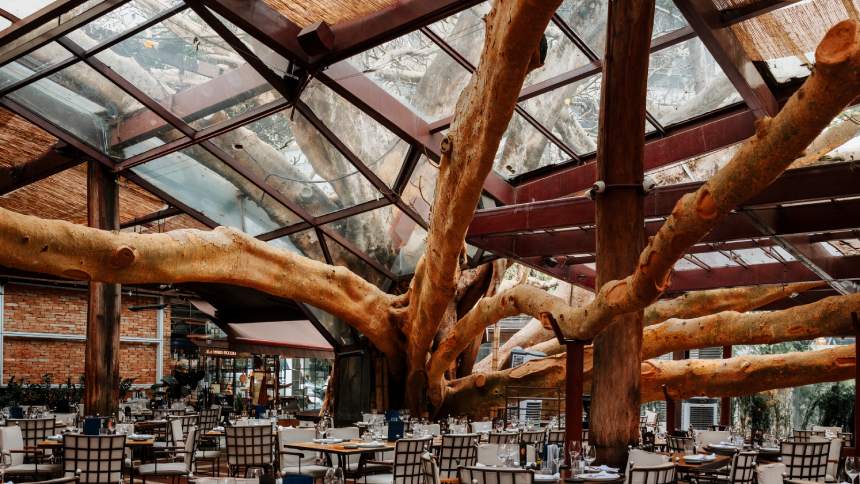
It is unrecognizable. The lush canopy that once reached almost 50 meters in diameter is now reduced to a few pruned trunks and scattered branches, supported by steel cables and ropes. For those who knew it in its heyday, the feeling is one of unsettling strangeness.
For nearly three decades, it was the main attraction of the A Figueira Rubaiyat restaurant. Opened in 2001 by the Iglesias family in the elegant Jardins neighborhood, the establishment helped transform it into one of São Paulo's most unlikely landmarks. Designated an Environmental Heritage site after more than a century of existence, its future is uncertain: only half of its structure is healthy.
“We inspect the trunks, branches, and leaves almost daily for all kinds of pests, we sanitize them, and we rigorously follow the fertilization process,” biologist Ítalo Mazzarella, responsible for the fig tree's care, tells NeoFeed . “We even have a device, a seismotron, that simulates micro-tremors to ward off termites and other pests,” adds the specialist, a partner at Gaia Consultoria.
Belonging to the species Ficus benghalensis , known as the banyan tree and native to southern India, the tree is one of the largest in the world. In its natural habitat, they can reach 30 meters in height and form canopies with a diameter of about 100 meters.
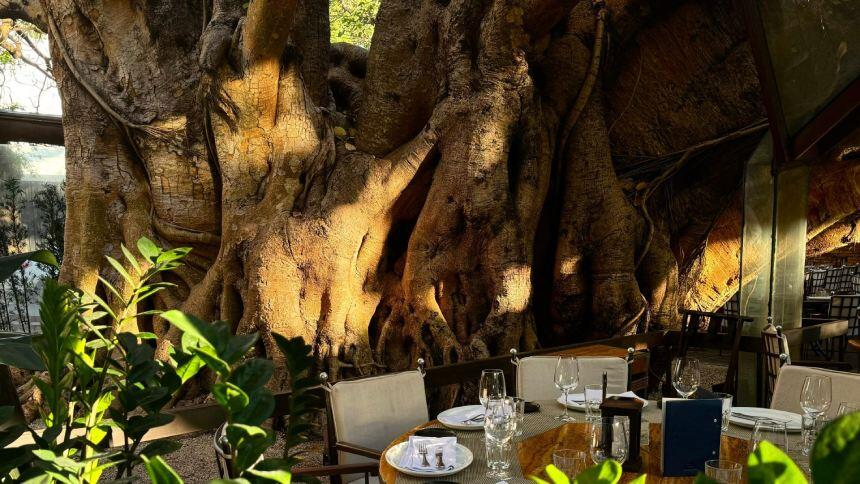
It sends out aerial roots from its branches. These roots descend to the ground, take root, and begin to function as new "trunks." Over time, this repeats itself several times. The result is a structure that begins as a single tree but transforms into a network of interconnected fig trees. That is why they are called "single-tree forests."
This form of growth also explains the longevity of the species. Even if older parts age or die, others continue to form and assume the structural function. Instead of depending on a single trunk, it remains in constant renewal.
At Figueira do Rubaiyat, this process is being induced. Mazzarella is trying to stake the aerial roots to encourage them to reach the ground—so that they gain size and nourish the trunks and branches, increasing their life expectancy. This is the biggest bet for a long life for the imposing tree.


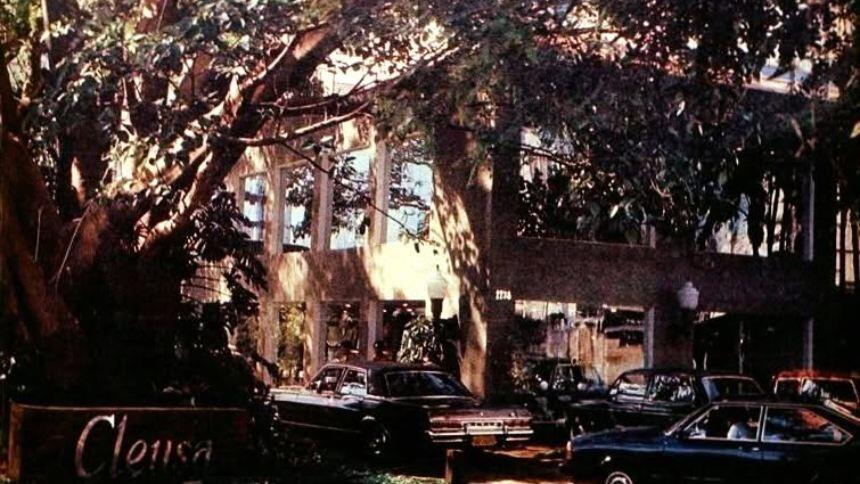
The decade was the 1890s. The exact year, nobody knows for sure. São Paulo had just over 60,000 inhabitants. Paulista Avenue had just been inaugurated, and the Jardins neighborhood was dominated by farms, smallholdings, and smallholdings. On one of those properties, the fig tree was planted.
And it spent much of its history away from the spotlight. In the 1970s, however, when Jardins ceased to be an exclusively residential area and became the hub of high-end commerce in the capital, the fig tree began to shade the parking lot of a decoration store.
In the transformation of provincial 19th-century São Paulo into the bustling metropolis of the 21st century, the tree was gradually suffocated.
“It lost space, for example, to water, sewage, and drainage pipes. You might think the location hasn't changed that much, but the tree is at the 'foot' of Paulista Avenue, where a water table was cut off, in other words…”, laments the biologist.
Because it forms an extensive root system underground, not all of its structure is protected by the Iglesias. Roots of the fig tree have been found 50 meters beyond the restaurant. More recently, a part of it was cut during construction work for another building in the area.
“We are doing what needs to be done,” says Belarmino Iglesias, son of the founder of Rubaiyat, in an interview with NeoFeed . “Our job is to contain the spread of damage, eliminate risks, and protect the tree from potential threats.” The group spends between R$700,000 and R$1 million on preserving the fig tree.
When the family acquired the land on Haddock Lobo Street in 1999, the tree occupied the parking lot of a decoration store. "The tree's roots were covered by more than one layer of cement," recalls the businessman. "We removed all that pavement to promote the regeneration and strengthening of the tree, allowing the roots to 'breathe' for almost a year."
It was then that the family realized that the design of the new Rubaiyat should revolve around the fig tree—and not in spite of it. The main hall was conceived around its majestic canes, as the aerial roots are called. And so the fig tree gave the house its name.
Beneath its canopy, the Brazilian elite have lunched and dined; artists, intellectuals and businesspeople; presidents and heads of state; kings and queens; princes and princesses — Fernando Henrique Cardoso; Bill Clinton; Felipe VI of Spain; Silvia of Sweden; Mariah Carey, Sting. And so go the illustrious diners of the fig tree.
Even the Homer Simpson family made an appearance at a table next to the tree. Yes, the characters from the American cartoon. The "visit" took place in 2014, during the World Cup held in Brazil. "It was a pleasant surprise," says Belarmino.
More than that. The appearance on one of the most popular programs on the planet showed that Figueira's fame had already gone beyond the limits of São Paulo's gastronomy and reached even pop culture.