


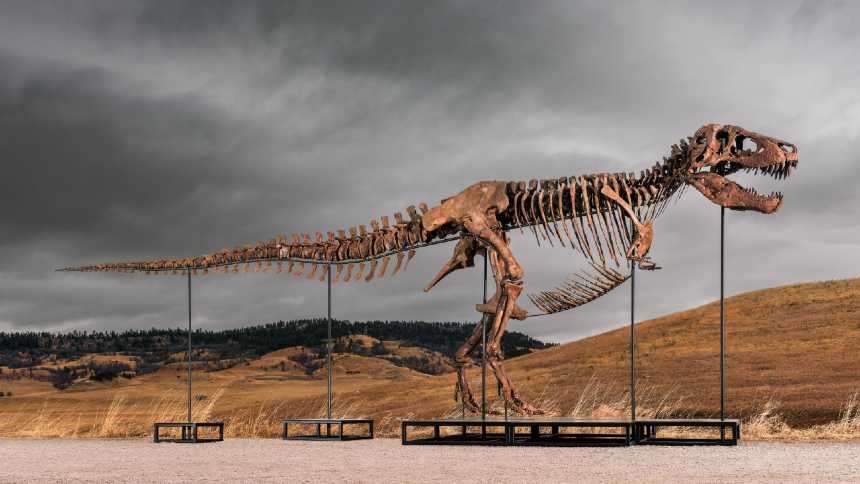

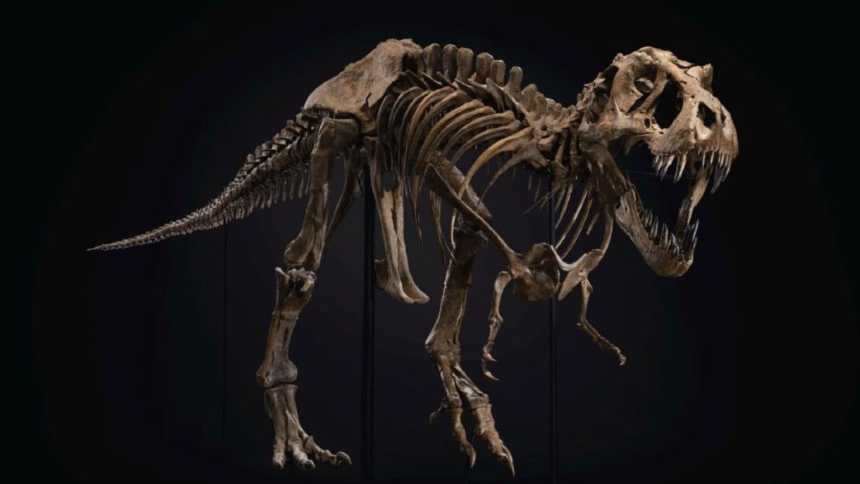
Gus died 67 million years ago. Until 2021, his remains lay hidden in the ground where Harding County is located today, in the American state of South Dakota. On Tuesday, July 14th, however, theTyrannosaurus rex ( T. rex ) ceased to be merely a scientific record of the evolution of life on Earth and also became an object of covetousness (and vanity) for ultra-wealthy collectors .
For ten minutes, at Sotheby's in New York, five bidders fought, bid by bid, for the skeleton. Shortly after four in the afternoon, the auctioneer's gavel fell: Gus had just become the most expensive dinosaur fossil in the world.
By telephone, an anonymous buyer snapped up that monumental collection of bones for US$50.13 million — a value about 70% above the auction house's estimates.
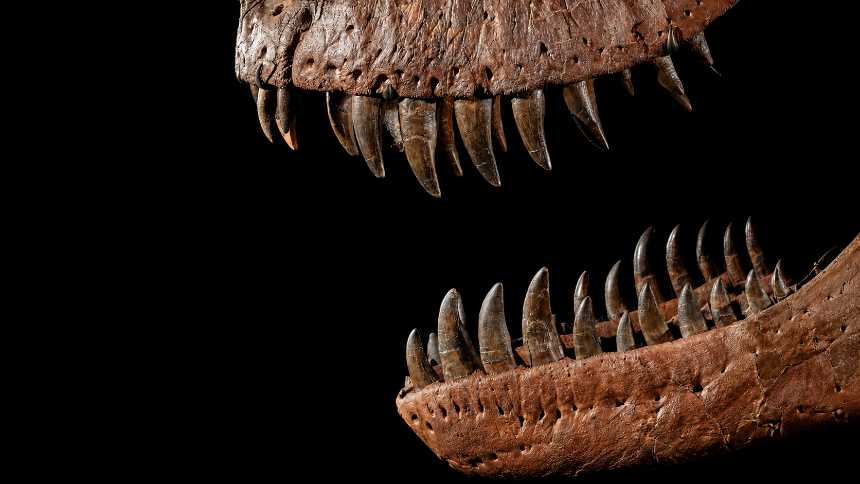
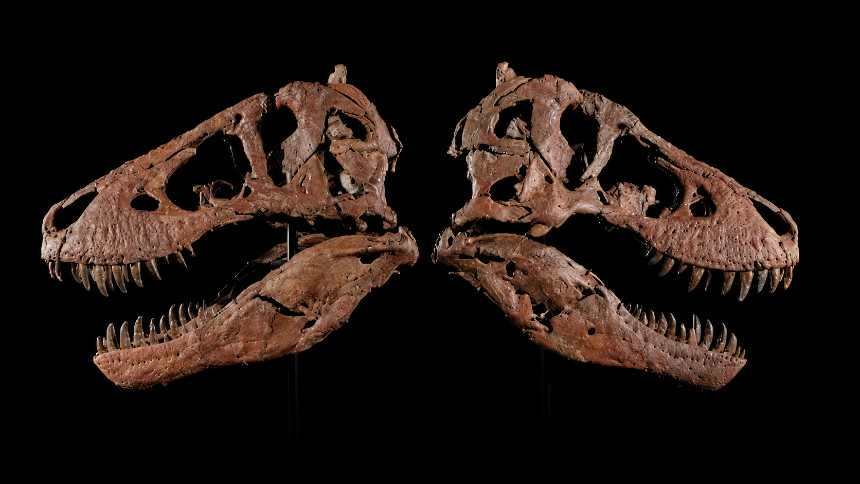
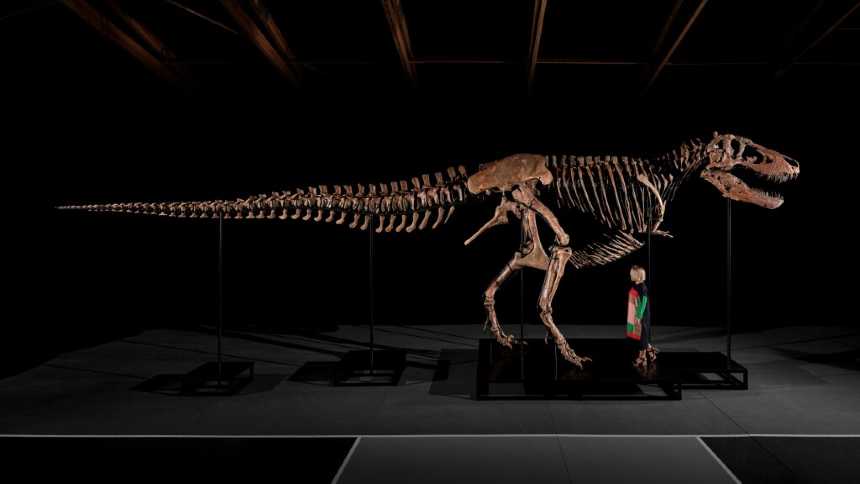
Measuring 11.6 meters in length and 3.8 meters in height, Gus is one of the largest and best-preserved T. rex ever discovered. The 183 bones recovered, along with 31 teeth and 30 of the 32 abdominal ribs, represent approximately 61% of the original skeleton.
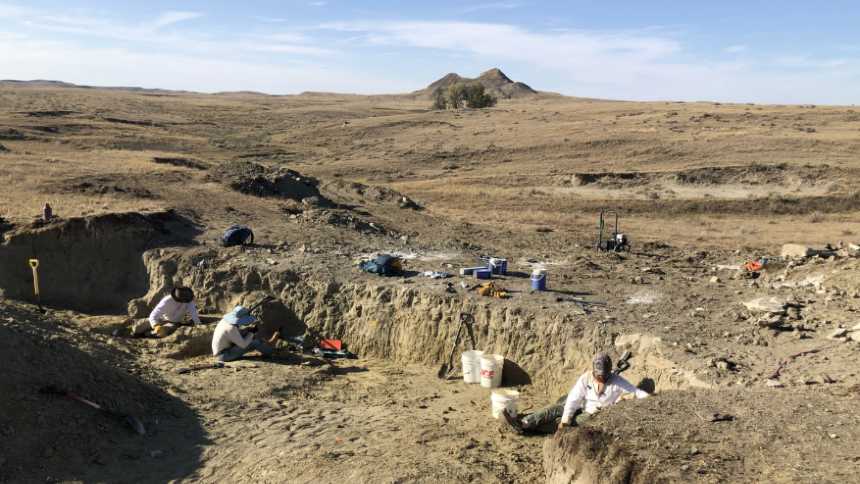
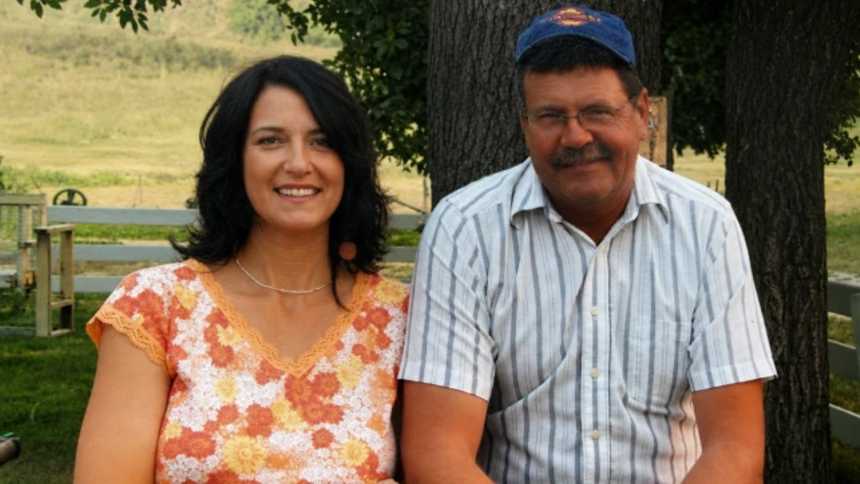
Gus's discovery began thanks to the curiosity of rancher Gary "Gus" Licking, owner of the cattle farm where the T. rex was found. For some time he had been collecting teeth and small bone fragments scattered around the property . Convinced that there was something bigger buried under his land, in 2021 he hired paleontologist Thomas Heitkamp to investigate the area.
Licking died a year after the excavations began, but his wife Dana continued the work of recovering the fossil.
The ranch is located in the Hell Creek Formation. Considered an open-air laboratory, the region offers a fairly accurate picture of the Earth's ecosystem shortly before the asteroid impact that reset life on the planet.
At that time, the area was crisscrossed by rivers and dominated by floodplains — which facilitated the fossilization of animals and plants and made Hell Creek one of the largest sources of T. rex fossils on the planet.
If geology explains how the T. rex remains were preserved since the Late Cretaceous, the market helps to understand why its skeleton has come to be worth tens of millions of dollars. The record achieved by Gus consolidates dinosaur fossils as a new category of high-end collecting.
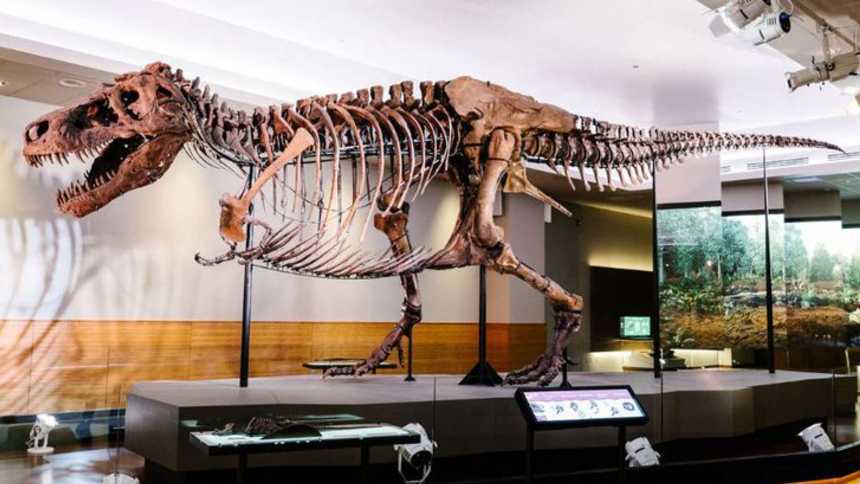
The movement gained momentum in the late 1990s, when Sotheby's itself brokered the sale of Sue, also a T. rex specimen. When it was auctioned for US$8.36 million, it helped elevate prehistoric fossils to a new level. Today, the skeleton is worth at least US$66 million, according to Sotheby's analysts.
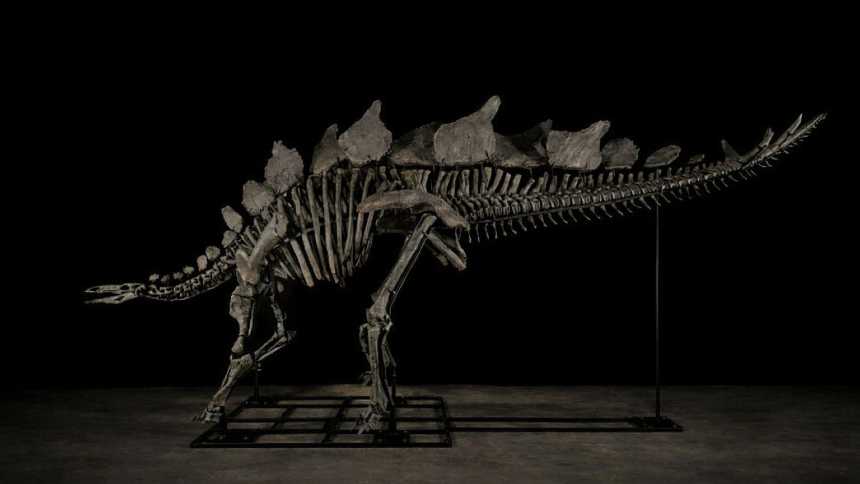
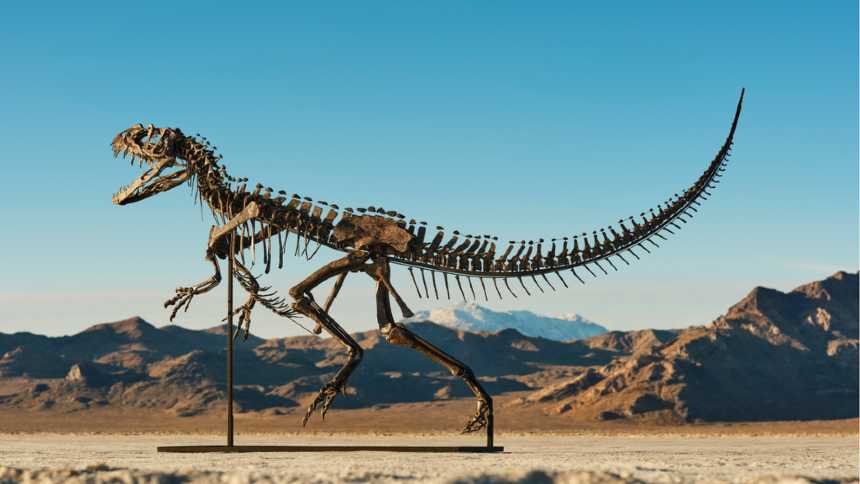
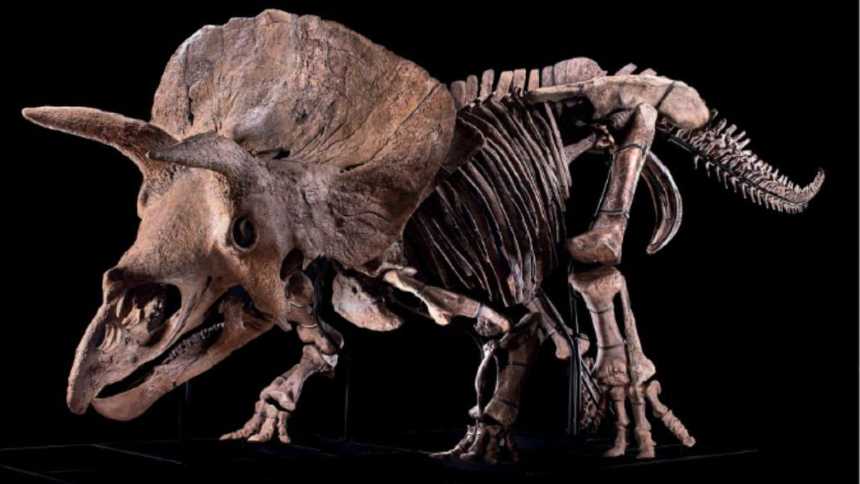
From then on, the major auction houses began creating departments specializing in natural history, and new records began to be broken — one after another (see the sequence of images below for the most valuable fossils) .
For very few
Today, owning the remains of prehistoric animals is one of the most exclusive symbols of prestige, especially among tech billionaires, hedge fund managers, and Hollywood celebrities.
In July 2024, investor Ken Griffin , founder of Citadel, for example, acquired a stegosaurus for US$44.6 million, also at a Sotheby's auction. At the time, the Jurassic herbivore set the world record for a dinosaur skeleton—a record now broken by Gus.
In 2008, actor Russell Crowe bought a mosasaur skull from Leonardo DiCaprio for US$35,000. Used to decorate his children's playroom, a decade later the fossil was sold for US$65,000.
Nicolas Cage wasn't so lucky. In 2015, he was forced to return the skull of a Tyrannosaurus bataar , the Asian cousin of T. rex , which he had acquired eight years earlier for US$276,000 at a gallery in Beverly Hills. The specimen had been illegally excavated in the Mongolian Gobi Desert.
One of the biggest weaknesses in the prehistoric fossil market is precisely this: who owns a dinosaur?
In Mongolia, China, Argentina, and Italy, for example, fossils are considered national heritage—regardless of who owns the land or who found them. In Brazil, a 1942 law stipulates that the collection, research, and removal of fossils require authorization from public authorities, and the commercialization of specimens is prohibited.
In practice, however, the restrictions do not prevent illegal trade. Although Brazil adopts one of the strictest legislations in the world, specimens continue to leave the country clandestinely. In December 2023, for example, the government completed the repatriation of 998 fossils illegally removed from the northeastern Araripe basin. Hidden in a shipment of quartz destined for France, the pieces remained seized for eleven years until they returned to Ceará.
In the United States, fossils found on private property belong to the landowner—and they can do whatever they want with the material. It's no coincidence that the American market is the most consolidated in the world, with a chain involving commercial paleontologists, laboratories and specialized stores, auction houses, and private collectors.
"An act of cowardice"
But what is a great deal for the new "owners of prehistory" could represent a data blackout for science.
A specimen like Gus “is not a trophy or a work of art. It is an irreplaceable scientific archive,” writes American paleontologist Kristi Curry Rogers, professor of biology and geology at Macalester College, in the article What science loses when T. rex becomes a trophy?, for The Conversation platform.
Scientific knowledge about a fossil never ends at the moment of its discovery. New technologies have the power to decipher mysteries that previously seemed inaccessible. Tomography scans, chemical analyses, and microscopic studies have already made it possible to uncover how dinosaurs heard, moved, grew, fed, and even details about their reproduction—questions that early paleontologists didn't even have the tools to formulate.
In private hands, however, scientists' access to the bones is not guaranteed. In a study published in the journal Palaeontologia Electronica , Thomas D. Carr, a professor at Carthage College in the United States, reveals that in 2025, there were 61 T. rex fossils in public collections, while another 71 were in private hands.
With prices in the millions of dollars, research institutions and museums cannot compete with private owners.
"With US$50 million, we could build a spectacular museum here in Brazil, capable of receiving one million people a year to visit, study, and learn," says paleontologist Luiz Eduardo Anelli, in a conversation with NeoFeed .
"What these collectors are doing is an act of cowardice against the world's scientific heritage," adds the coordinator of the "USP in Schools" Study Group at the Institute for Advanced Studies of the University of São Paulo — São Carlos Campus.
The researcher, however, is not against the trade in fossils. A total and inflexible ban, like the one adopted in Brazil, leads to another type of scientific suffocation.
By prohibiting any form of trade, donation, or exchange, the country prevents, for example, the exchange of surplus and well-cataloged pieces for specimens that are little studied in the country.
"A body of scientists could evaluate each specimen and decide: these can be sold, these need to remain in public collections," suggests Anelli. "In this way, we enrich museums legally and transparently."
Sixty-seven million years ago, Gus disappeared from the face of the Earth. Now, he returns as a $50 million asset. It remains to be seen whether Harding's T. rex will be remembered as a collector's trophy or as a permanent source of knowledge about the planet's past.