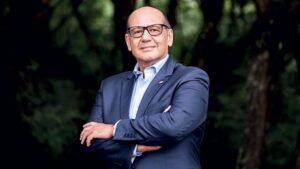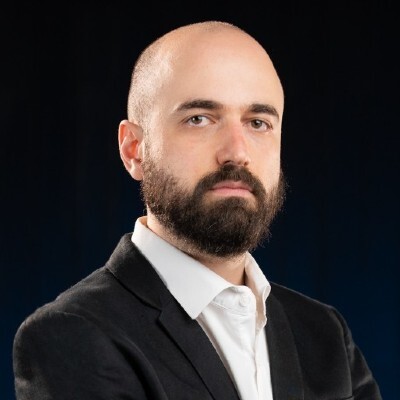


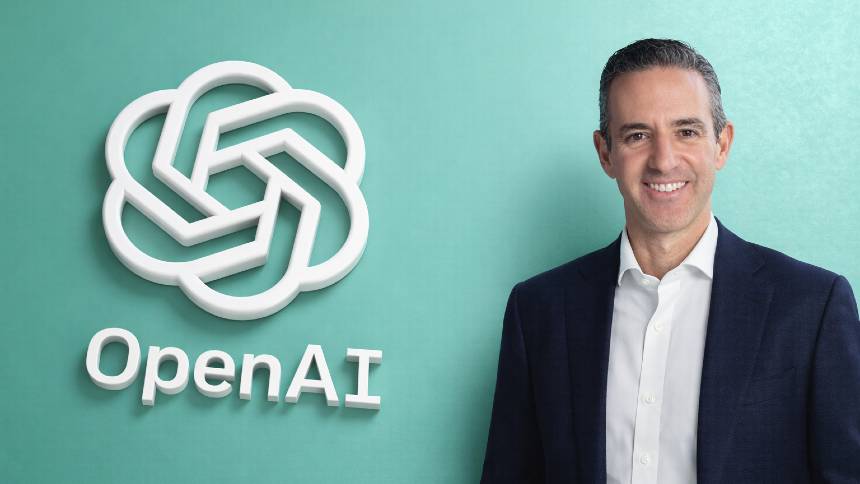

Amid preparations to go public, OpenAI announced on Tuesday, July 21, that David Vélez will strengthen its board of directors.
In addition to the founder and global CEO of Nubank , the creator of ChatGPT is also bringing Robin Vince, chairman and CEO of BNY Mellon , onto the board .
According to the company, the appointments aim to bring in two experienced executives who have led large publicly traded companies, at a time when OpenAI is working to strengthen its corporate governance ahead of its IPO.
"David and Robin are exceptional leaders who have used technology to reshape financial services and expand opportunities on a global scale. Their experience will be invaluable as OpenAI serves more businesses and people around the world," said Bret Taylor, chairman of the board of OpenAI, in a statement.
In addition to the board of directors, Vélez and Vince will also join the board of the OpenAI Foundation, a non-profit organization that controls OpenAI. The company reorganized its corporate structure in 2025.
The operating company became OpenAI Group PBC, which has the board of directors, while the former non-profit organization was renamed the OpenAI Foundation, now holding a 26% stake in the company.
OpenAI's board of directors is composed of people with diverse profiles, such as retired U.S. Army General Paul Nakasone and Zico Kolter, a professor at Carnegie Mellon University responsible for the institution's machine learning area. Taylor is the former co-CEO of Salesforce and CEO of the artificial intelligence startup Sierra.
Robin Vince will also chair OpenAI's audit committee, strengthening oversight of financial controls and corporate governance, according to The Wall Street Journal (WSJ) .
The appointments come at a strategic time for OpenAI. The company has been expanding its presence in the corporate market, intensifying the monetization of its artificial intelligence (AI) tools and strengthening its governance following changes to its board since the crisis involving CEO Sam Altman in 2023, when he was briefly removed from leadership .
OpenAI has been preparing to go public and filed a confidential IPO request with the Securities and Exchange Commission (SEC) in June. However, the operation may only take place in 2027 , after SpaceX shares fell in the days following the listing, in addition to recent news about new AI models coming from China .
Market information suggests that Altman intends to take OpenAI public with a valuation of $1 trillion, surpassing the $730 billion valuation achieved in the funding round held in February, when the company raised $110 billion.
While seeking the best valuation to go public, OpenAI also needs to deal with a number of thorny corporate governance issues, including lawsuits alleging that the company encouraged suicides and harmful hallucinations through ChatGPT .
All of this is happening at a time when competition in artificial intelligence is intensifying. Anthropic has been gaining ground and recently showed faster revenue growth than OpenAI, while consuming less cash, an unfavorable comparison for Sam Altman's company on the eve of its IPO.