

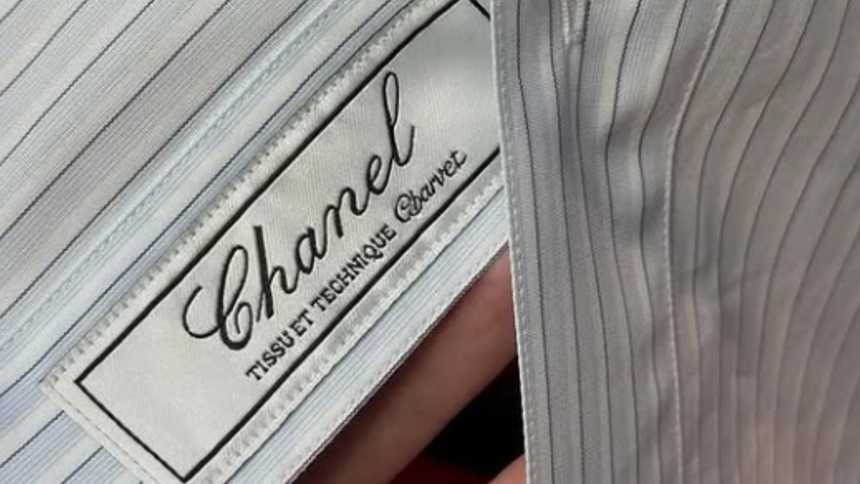
In a quest to gain more space in men's wardrobes, Chanel has completed the acquisition of the world's oldest shirtmaker.
The French group announced on Thursday, July 2nd, the purchase of Charvet , a renowned Parisian brand recognized as the oldest shirt manufacturer in the world, founded in the 1830s. Financial terms were not disclosed.
The strategic operation seeks to strengthen Chanel's presence in the menswear segment, adding to its portfolio the artisanal know-how and historical legacy of Charvet, a benchmark in haute couture tailoring.
This move signals a significant expansion for Chanel in the men's fashion market, traditionally dominated by competitors with strong expertise in tailoring .
In recent years, Chanel has invested in diversifying its lines and consolidating its presence in the men's segment, which represents a growth opportunity given the evolution of luxury consumption.
Until then, Chanel primarily offered male customers accessories, fragrances, and some clothing items, with few options for bespoke clothing or classic tailoring.
"Now we have one name, Chanel, for women, and one name for men, Charvet," said Bruno Pavlovsky, president of Chanel's fashion division, in a video.
According to him, Charvet will be operated as an independent business, within the Chanel umbrella, to guarantee the autonomy and continuity of the brand's work.
Chanel had already been getting closer to Charvet. According to a report in Vogue Business magazine, Chanel's artistic director, Matthieu Blazy, collaborated with Charvet on a long-sleeved cotton shirt. When the shirt arrived in Paris stores in March, priced at €3,900, it quickly sold out.
The acquisition of Charvet represents an evolution in Chanel's strategy, expanding its presence in the men's fashion segment with a line of handcrafted shirts recognized worldwide and with famous fans such as Winston Churchill , Charles de Gaulle, David Beckham, and Chanel's founder, Coco Chanel.
The purchase is also aligned with Chanel's recent strategy of internalizing production to gain greater control over the production process. The group has a history of acquiring smaller brands, such as Orlebar Brown, a men's shorts company; Barrie, a Scottish cashmere specialist; and the lingerie manufacturer Eres.
The integration will allow the company to expand and develop more sophisticated men's collections, aligned with Charvet's tradition and expertise. In addition to shirts, the brand also features a line of ties and pajamas.
Chanel's expansion into menswear comes at a time when the century-old brand is seeing a return to growth, after revenue and profits were hurt by the crisis that has hit the luxury market in recent years.
Chanel's sales grew 2% organically, reaching $19.3 billion last year, a recovery after a rare contraction in sales and profits the previous year. Operating profit increased 5% to $4.7 billion, after a drop of almost a third in 2024.