

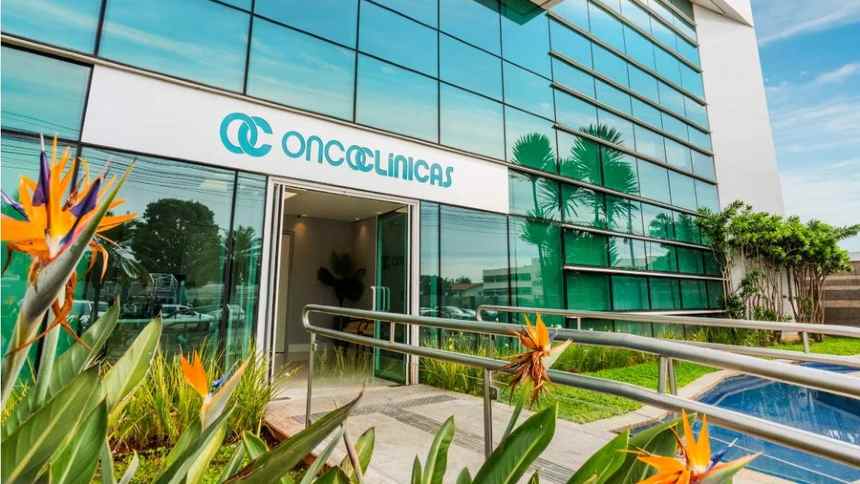
Goldman Sachs and the American asset manager Centaurus Capital have taken the lead in the dispute against minority shareholders who are requesting a takeover bid for Oncoclínicas.
Minority shareholders argue that a share transfer between the parties, which occurred in November 2024 and March 2025, triggered the poison pill provision in the company's bylaws. However, the technical area of the Brazilian Securities and Exchange Commission (CVM) determined that there is no obligation to make an offer.
The understanding is contained in the technical opinion signed by the Registration Management-1 (GER-1), an area of the Securities Registration Superintendency (SRE) responsible for the case. According to the technical team, Centaurus already indirectly held more than 15% of Oncoclínicas' capital before the company's IPO in August 2021.
According to the report, the stake has been held since 2018 within a co-investment structure controlled by Goldman Sachs.
Since the Articles of Association exempt those who were already significant shareholders on the date of the initial public offering from the takeover bid, the SRE concluded that the transactions between November 2024 and March 2025 did not constitute the entry of a new investor, but rather the redistribution, between Goldman Sachs and Centaurus, of a position that already existed.
CVM admits "fragility" in structure
The engineering behind the dispute involves the funds named Josephina. Before the reorganization, Josephina II FIP directly held 72.51% of Oncoclínicas' capital — and it was within this vehicle that Centaurus' economic stake of 31.81% was "hidden" behind the discretionary management of Goldman Sachs , according to the CVM's opinion.
The document explains that Centaurus had the right to request the dissolution of the structure, but not the right to decide how the investment would be returned. That choice belonged to Goldman Sachs, in its position as general partner , which could sell the assets and transfer the money, instead of handing over the Oncoclínicas shares.
“It was not guaranteed that she would receive Oncoclínicas shares under the terms of the aforementioned contractual clauses,” the opinion states. “Thus, in light of a concept of 'rights over shares' that is interpreted as encompassing full political and economic rights, Centaurus's position presents areas of weakness.”
According to the opinion, the right of dissolution, since it applies to the partnership and not to the shares of Oncoclínicas, and since its execution is subject to the agreement of the general partner , "is, from this perspective, closer to a qualified economic exposure than to the full ownership of political and economic rights."
Although acknowledging the "fragility," the technical area argues that Oncoclínicas' bylaws did not define what "rights over the shares" would be.
Article 39 of Oncoclínicas' bylaws requires anyone who reaches 15% of the capital to make a takeover bid for all shares. However, the clause itself provides an exception in paragraph 8: those who already owned this significant stake on the date of the company's IPO announcement in August 2021 are exempt from the offer.
The clause, however, does not specify what counts as "right over the shares" for the purposes of the rule. The same expression appears both in the bylaws rule that creates the obligation for a takeover bid and in the exception that waives it, but the term was not defined in either case.
Centaurus relies on this exception. Since, according to the opinion, it already held more than 15% of the capital indirectly before its IPO, the 2024-2025 reorganization would not create a new obligation for a takeover bid, but would only formalize a position that already existed.
Without the definition in the bylaws, the SRE argued that the most correct interpretation would be the one that considers the purpose of the exception. According to the SRE, the rule in paragraph 8 "was clearly inserted into the bylaws with the intention of exempting the two groups that stood out in this structure, namely Centaurus and Goldman Sachs, from the mandatory takeover bid."
The exception, SRE stated, "only exists to exclude the two groups that comprised the partnership at the time of the IPO, namely Centaurus and Goldman Sachs, in addition to the company's founder"—a reference to Bruno Ferrari, who also spoke out in the process questioning Centaurus's thesis.
Minority groups react
ABRAICC had already appealed to the CVM Board even before the technical opinion was released, requesting, in April of this year, that the process be taken over by the agency's leadership due to alleged inaction by the SRE — an argument that was rejected by the CVM's Specialized Federal Prosecutor's Office.
Now, with the unfavorable outcome for minority shareholders, Latache states that it will also appeal to the Board. The activist fund assumed a significant position in Oncoclínicas last year and is now one of the company's main shareholders, with 14.59% of the shares.
The asset manager informed NeoFeed that, even with the unfavorable decision, the takeover bid remains the central thesis of the investment and that it intends to maintain its position in the company.
"After almost a year of waiting for a response from the CVM's technical area, a timeframe that is highly unusual for this type of request, Latache expected nothing different from the technical area," the asset manager stated in a note sent to NeoFeed .