


Amid negotiations with creditors facing R$4.5 billion in debt to settle its financial obligations, GPA announced on Thursday, April 16, the arrival of three new executives to its executive board to adjust the operational side.
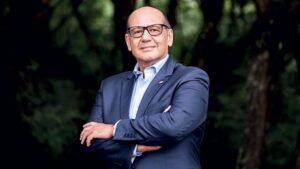
The retailer announced that it has hired José Rafael Vasquez, who was CEO of Sam's Club in Brazil and led the retail division of Carrefour in the country, in addition to having worked at Walmart , Cencosud and Pague Menos , for the position of commercial director.
GPA also brought in Jonas Laurindvicius, former CEO of Grupo DPSP , to be executive director of supply chain, and Jorge Jubilato, who previously worked at Pague Menos, Rede de Farmácias São João, and Atacadista Roldão, to lead the human resources area.
With the arrival of the three executives, GPA consolidates the structure of its executive board, which includes Pedro Albuquerque as CFO and Investor Relations Director, and Marcelo Prieto, the current Chief Operating Officer, and is now moving to accelerate its strategic agenda, focused on efficiency gains and a return to profitability.
“We have a big challenge. We need to resolve the company's tax, labor, and financial liabilities, but just as important is the day-to-day operations themselves,” says Alexandre Santoro, CEO of GPA, to NeoFeed . “That's why we've assembled a highly experienced team, with a background in retail and proven execution capabilities, to make the company more efficient.”
Santoro says the new board composition reflects the company's priorities. Since taking over the helm of GPA 90 days ago, Santoro has established three guiding principles for his operational work: delivering customer experience, increasing operational efficiency, and financial discipline.
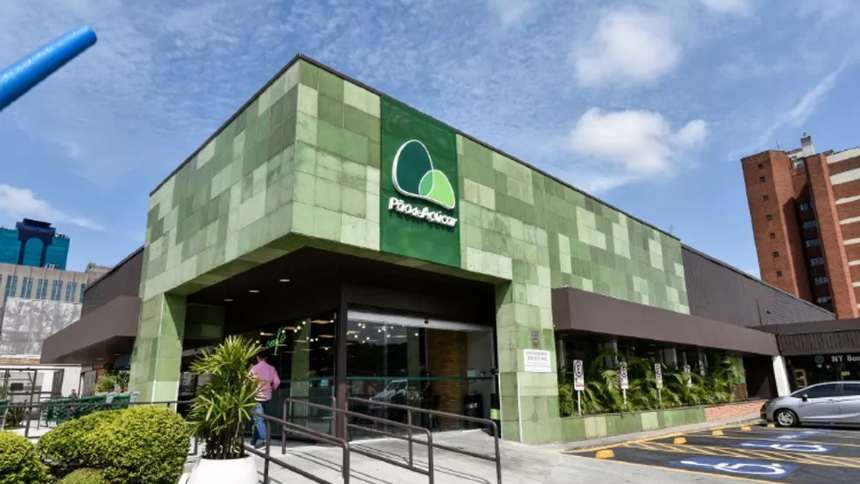
With the new directors, the goal is to build upon what has already been done and implement new initiatives. Regarding operational efficiency, Santoro says that GPA has been working to improve product assortment and is redesigning its logistics, making adjustments across the company's different brands – Pão de Açúcar , Extra, Mini Extra, and Minuto Pão de Açúcar.
Santoro plans to build upon the work done by the previous management, led by Marcelo Pimentel . One of the key points is to focus Pão de Açúcar on a more premium audience. “This strategy for Pão de Açúcar makes perfect sense. What's different is that we are reviewing the convenience store operations and the Extra banner,” says the CEO.
The new management team will also seek to reduce costs, aiming to make GPA more "lean," and review investments, with no plans for major divestments. The goal is to cut more than R$ 700 million in costs and capital expenditures, a target announced at the end of last year.
“Over the past few years, the company has ended up investing heavily in expansion, and at this time, we are not going to invest in expansion,” he says. “Our top priority is to improve our current store network, which also means savings on capital expenditure.”
The arrival of the new board will further refine the strategic plan, based on the basic principles that Santoro has been implementing. The expectation is to present this plan to the market at a later date, with Santoro not wanting to commit to a deadline.
Improving operations, with increased profitability and reduced costs and capital expenditure, is fundamental to dealing with the pressure coming from the financial side. With cash flow under pressure , even though positive, GPA has approximately R$ 1.7 billion in debt maturing in the next 12 months, while operating cash flow, after working capital variations, reached R$ 1.3 billion at the end of 2025, increasing by 37.8%.
Financial pressure forced GPA to file for out-of-court restructuring in early March to suspend any debt enforcement for 90 days and obtain a grace period for interest payments during that period.
Initially, the company secured the support of non-operational creditors who account for approximately 46% of the debt, a large portion of which are banks – GPA needs more than 50% to proceed with the out-of-court restructuring.
According to Santoro, the talks are progressing positively, with both parties engaged. "It's a time for discussion and negotiation, but I would say it's at a high level, and we still have another 60 days to conclude the negotiations," he says.
Another point that the new board intends to address with the business plan is the issue of R$ 17 billion in tax and labor contingencies in the coming years. "We have a series of measures that we have taken; there are plans to address and structure these liabilities," says Santoro.
GPA shares closed the day up 0.87%, at R$ 2.33. Year-to-date, the shares have fallen 41.1%, bringing the market value to R$ 1.16 billion.