

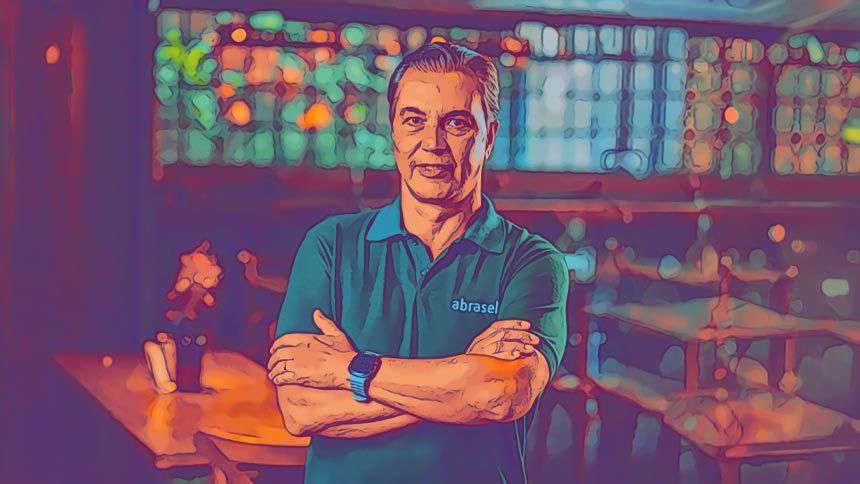
The inaction of the Administrative Council for Economic Defense (Cade) in recognizing the harm caused by exclusive contracts in the delivery market is leading to the creation of a duopoly in Brazil, formed by iFood and 99Food. This assessment comes from the president of the Brazilian Association of Bars and Restaurants (Abrasel), Paulo Solmucci.
The decision made by the agency's general superintendent on Thursday, June 25, to shelve the investigation into 99Food's exclusivity practices, initiated by Keeta, harms competition in the sector, according to the executive.
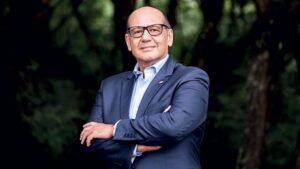
“This greatly increases the risk. It was a disastrous decision. Abrasel asked to be part of the process, but that wasn't even considered. If Cade doesn't act, the delivery sector could become a duopoly, controlled by iFood and 99Food,” says Solmucci, in an interview with NeoFeed .
According to him, in the city of São Paulo, the only municipality in Brazil where the three platforms operate together, the delivery market grew by 20%. Data from Abrasel shows that, in the capital of São Paulo, 99Food already has 30% of the market share , and Keeta, close to 10%. The other 60% belongs to iFood.
Following CADE's statement, Keeta stated that "the decision does not close the case, since the CADE Tribunal is currently reviewing a voluntary appeal, which could reverse the dismissal."
According to the general superintendent's assessment, 99Food does not possess market power capable of restricting competition or preventing the entry and expansion of new competitors.
"99Food welcomes the decision by Cade (Brazil's antitrust authority) and remains available to collaborate in any other phases that the authority deems necessary. The company reiterates the complete legality of its initiatives," 99Food stated in a press release.
On June 15th, NeoFeed exclusively revealed that direct competition between the three will move to a second city starting in July : Santos, on the coast of São Paulo, with the arrival of 99Food in the region. Keeta entered the country through the Baixada Santista region last October.
According to Solmucci, any form of restriction on restaurants' access to any platform harms the consumer. While he defends Keeta's initiative to pay 100% of the exclusivity penalty only to establishments that do not join other platforms as a way to expand the market, the president of Abrasel acknowledges that the measure goes against the general opening to all players .
“Abrasel advocates for zero exclusivity in the sector,” he states. “This is the result of Cade’s lack of proper action. They only act after some anti-competitive action arises, to try to inhibit it. And even then, it takes a long time. Ideally, the agency should act sooner.”
Below are the main excerpts from the Abrasel president's interview with NeoFeed :
The delivery sector is currently experiencing a war. How do bars and restaurants view this fierce competition?
We've observed a market where all three operate, experiencing market growth. In São Paulo, for example, the sector is growing by over 20%. It's a tough market, with competition like we've never seen before in Brazil. 99Food has registered strong growth in the São Paulo capital. There are indicators showing it could be close to 30% market share . Keeta already has 10%. What we see is that iFood has ceded part of its market share , which was always high, and today it's close to 60%. It's difficult to sustain when there are new entrants with an appetite to subsidize the consumer.
Which one of them is facing the biggest challenge today?
Keeta. Since 99Food got there first and dominated the market with exclusivity contracts, it's become much more difficult for the company, which is still arguing this with CADE (Brazil's antitrust authority). But there are winners in this story. The first is the delivery driver, who earns 30% more than a year ago. The second is the consumer, who pays at least 20% less where there is greater competition.
"What we have noticed is that this joint action of the platforms is opening up a market that did not exist before."
And what about restaurants?
What we've noticed is that this joint action of the platforms is opening up a market that didn't exist before. Many small businesses that weren't approached by iFood, because of its dominance, were approached by Keeta and 99Food. This broadened access for small restaurants to platforms and allowed consumers to have access to services that weren't available before. Before, many could only order a sandwich from McDonald's. Now they can order from a burger joint near their home. And this also increased consumption opportunities, creating moments beyond just the weekend.
Have there been reductions in the fees paid to use these platforms?
Today, they are lower. In the first few months, 99Food implemented a zero-fee policy, then started charging. But, in general, restaurants pay 20% less than they were charged last year.
Is it bad for restaurants to sign exclusivity contracts with apps?
Those who sign exclusivity contracts often fail to see this and prefer to focus on investments. Abrasel (Brazilian Association of Bars and Restaurants) does not view this type of contract positively. The restaurant that signs receives funding upfront and sometimes only considers that. We have always been against exclusivity. I remember that 20 years ago we even went to CADE (Brazilian antitrust authority) against Ambev (a Brazilian beverage company). For the consumer, this is not good. On the platform, it's very serious. When the customer doesn't find the restaurant they want to buy from, they leave the app.
CADE (Brazil's antitrust agency) decided to close a case that was underway regarding Keeta's complaint about 99Food's exclusivity clauses. What is your assessment?
This greatly increases the risk of a duopoly in the sector. This process had been at CADE (Brazil's antitrust agency) for almost a year and was signed on the last day of the superintendent-general's term. It was a disastrous decision. Abrasel (Brazilian Association of Bars and Restaurants) asked to be part of the process, but this wasn't even considered. We weren't heard, and we would have had a lot to contribute. But I expect this decision to be reversed. If CADE doesn't act, the delivery sector could become a duopoly, controlled by iFood and 99Food. It's necessary to act more firmly against the platforms. The consumer is the one who loses.
"Abrasel advocates for zero exclusivity in the sector. This is the result of Cade's failure to act correctly."
What is the potential harm to the market from maintaining these exclusivity contracts?
Keeta, for example, planned to reach 1,000 cities in Brazil within two years. And it's currently in 11, precisely because of this exclusivity clause it found. It represents 1% of its intended goal. This shows how much this can contain competition. It's not a problem of money or technology. They claim they found 50% of the restaurant chain market closed in São Paulo. In Rio de Janeiro, it was even higher. Maintaining this clause prevents the growth of other platforms.
On the other hand, doesn't Keeta do something similar?
I don't see it that way. 99Food even included a clause in its contract banning restaurants from joining Keeta and Rappi. But it allowed iFood. That's what generated the lawsuit at CADE (Brazil's antitrust agency). Because of this, Keeta started paying exclusivity penalties to some, offering the full amount if they chose to stay only with Keeta and iFood. And offering 50% to work with others. Their reasoning is that they don't want to pay penalties to favor their competitors. There's an incentive not to partner with others.
But doesn't that go against the rationale of opening the market to all companies?
Yes, it will. But it's a path they're considering to gain market share. Abrasel advocates for zero exclusivity in the sector. This is the result of Cade's lack of proper action. They only act after some anti-competitive action arises, to try to inhibit it. And even then, it takes a long time. Ideally, the agency would act sooner. If this already existed, Cade could have already imposed restrictions, as already exists in China. Cade knows that what iFood and 99Food are doing is closing the market. The authority has to prohibit everyone.
In any case, is there room for more than two delivery companies in Brazil?
Many people say it's a market for two companies. I hope and work for it to be for three. In the world, it's only possible to have more than two players when the market is growing. Companies understand that the Brazilian market could double in five years, which would allow for competition. But, in 10 years, it tends to be down to just two. I would like the three to have national strength. And the other platforms will have regional strength, in smaller cities, like Aiqfome (controlled by Magalu).