

Brasilia — Even before the kickoff of the 2026 World Cup, which began this Thursday, June 11, an off-field factor has been shaking up the e-commerce market in Brazil: the largest digital shopping platforms (marketplaces) have definitively come under the scrutiny of the National Congress, the Consumer Protection Agency (Procon), the Federal Revenue Service, and even the Federal Police.
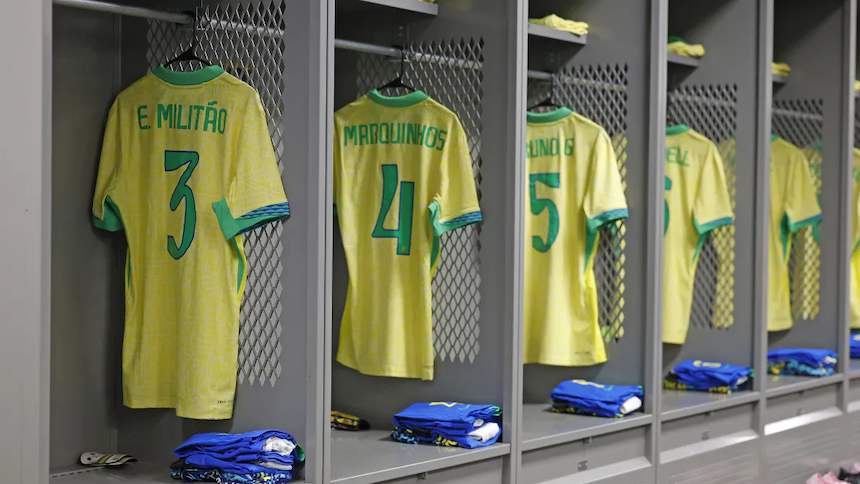
The reason: the increasing sale of counterfeit or smuggled Brazilian national football team jerseys and other sporting goods during this time of year when fans are cheering for the Seleção. The illegal market has been growing not only during the World Cup, but it gains strength during this period, driven by social media and the online environment, where control is difficult and more complex.
Consumer protection and regulatory agencies have been closely monitoring the recent growth in the illegal sale of sporting goods. In recent months and weeks, there have even been operations by the Procon (consumer protection agency) across the country, as well as by the Federal Revenue Service, in partnership with the Civil Police and the Federal Police.
The seizures target physical addresses of stores and customs and border posts (airports, ports), but the destination of the counterfeit shirts often also involves e-commerce.
In the Legislative branch, the external commission "Brasil Legal," created this year in the Chamber of Deputies to combat piracy, has been alerting authorities to expand notifications to digital influencers and especially to purchasing platforms.
Federal Deputy Júlio Lopes (PP-RJ), who heads the commission and is also president of the Parliamentary Front for a Competitive Brazil, told Neofeed that he has been holding several meetings with shopping websites such as Shein, Mercado Livre, Amazon, and Shopee. And the results are beginning to appear, following integrated action between the Internal Revenue Service, consumer protection agencies, the Federal Police, and the Federal Highway Police.
“You can’t sell pirated goods as if they were official. They have to at least warn the consumer,” says Lopes, adding that Mercado Livre and Amazon have been cooperating, but the Chinese platforms “less so.”
These websites host various stores and individual sellers who use the platforms and also social media profiles to market their products. However, these websites themselves sometimes lose control, warns Johnatan Faraj, director-general of Procon-DF, in Brasília, who has also been holding meetings with digital companies in an attempt to reduce the illegal online trade of sports shirts – which range from R$ 40 to around R$ 100.
Faraj reveals a curious situation involving these sales: many sellers using large platforms mask the sale of counterfeit national team shirts. When searching for such a shirt on the site, another product appears (a pillow, for example), but clicking on it opens a link to the sale of the illegal clothing.
"The platforms need to have better vetting procedures for the sellers who host their listings. They [marketplaces] are also responsible for these sales. And today we see a completely illegal market growing on these platforms."
In a statement to NeoFeed , the Brazilian Federal Revenue Service reported that it has been working "permanently" to combat counterfeiting, piracy, and the illegal sale of goods, including items associated with the World Cup, the Brazilian National Team, etc.
In recent months, the agency seized 965,500 sports jerseys in operations at the ports of Santos (SP) and Rio de Janeiro, at Galeão Airport (RJ), in an operation in Boa Vista (RR), and one in the capital of São Paulo.
The tax authorities further clarify that the focus of the operations is on inspecting these goods at the point of entry into the country (border points, customs), since many are imported. However, they admit that the destination of many of these shirts is also the informal market.
The brands
Major sporting goods brands such as Adidas, Nike, and Puma, and even the Brazilian Football Confederation (CBF), have already been called to public hearings in the National Congress on the subject and have demanded answers from the marketplaces.
A recent survey commissioned by the Association for the Sports Industry and Trade (Ápice), which represents these brands, in partnership with the Institute for Industrial Studies and Marketing (IEMI), showed that 18.1 million counterfeit soccer jerseys were sold in 2025, equivalent to 30% of all jerseys of this type consumed that year.
“This year that number should grow by at least 50%, exceeding the 30 million unit mark, largely due to the World Cup,” Ápice's CEO, Renato Jardim, told NeoFeed . “In fact, we have a gigantic growth of these products online, which makes it difficult to combat.”
According to the survey, approximately 225 million counterfeit sporting goods items were consumed in the country last year, a 30% increase compared to the previous two years. Around 450 sporting goods items are purchased per minute in Brazil, where piracy has already caused an estimated potential loss of R$ 31.8 billion to the sports market last year alone.
“We have a very good dialogue with several platforms; many try to combat this, but some don't even have representation in Brazil. And even the platforms that collaborate take down ads for counterfeit products, but the problem is that there are thousands,” says Jardim. “The most complicated are social networks and WhatsApp. It's a gigantic challenge, and Brazil urgently needs to advance in the regulatory field on this issue.”
The executive, however, acknowledges that due to the price of the original jerseys (an official national team jersey costs R$ 450 on the Nike website, excluding taxes) there is a proliferation of illegal trade. The research itself shows that 70% of respondents cite price as the reason for buying the counterfeit product.
“We need to improve public access to these jerseys, which should contribute to a reduction in piracy. The problem is the tax, which represents 40% of the price of a national team jersey and up to 50% of a European club jersey because it is imported.”
Marketplaces
In response to increased pressure from authorities, major digital commerce platforms are defending themselves, saying they have been working to combat the sale of counterfeit sporting goods.
In a statement to NeoFeed , the Brazilian Association of Mobility and Technology (Amobitec), which represents the digital platforms Amazon and Shein, reported that the potential offering of products that violate intellectual property laws on its platforms is a "matter of constant concern."
According to the organization, companies have been adopting tools such as whistleblowing channels and support mechanisms for holders of trademarks, patents, industrial designs, and copyrights. The goal is to prevent, identify, and remove content that may infringe on the rights of third parties.
"The associated platforms also cooperate with Brazilian authorities and remain available to collaborate on enforcement actions, regulatory improvements, and initiatives to combat illegal practices in the digital environment," added Amobitec.
Mercado Livre responded that, regarding the sale of sporting goods and official jerseys in Brazil, it maintains a "task force," in partnership with Nike (manufacturer of the national team's jersey), to act swiftly in identifying advertisements for these counterfeit jerseys and in combating networks that impact legal commerce.
"The platform acts continuously and proactively in monitoring and removing irregular ads — a practice that is part of the company's operational routine, regardless of specific cases," the platform said in a statement.
Mercado Libre also claims to use a tool (Intellectual Property Protection Program) through which trademark holders—or their legal representatives—can quickly report advertisements for counterfeit products. It also uses artificial intelligence and machine learning to automatically identify and remove suspicious advertisements, "based on learnings obtained from general infringement trends observed in the reports received."
Shopee responded that it "complies with local laws and requires sellers to comply with applicable legislation and the platform's Prohibited and Restricted Products Policy." It also stated that it employs continuous prevention, monitoring, and detection through artificial intelligence, in addition to providing reporting channels for users and brand manufacturers, to curb the sale of counterfeit products and items that violate intellectual property rights.
"The company collaborates with authorities and competent bodies to contribute to the compliance and integrity of the digital ecosystem. Whenever we identify evidence of irregularities, we take appropriate measures. We reaffirm our commitment to maintaining a trustworthy environment for consumers and entrepreneurs."