


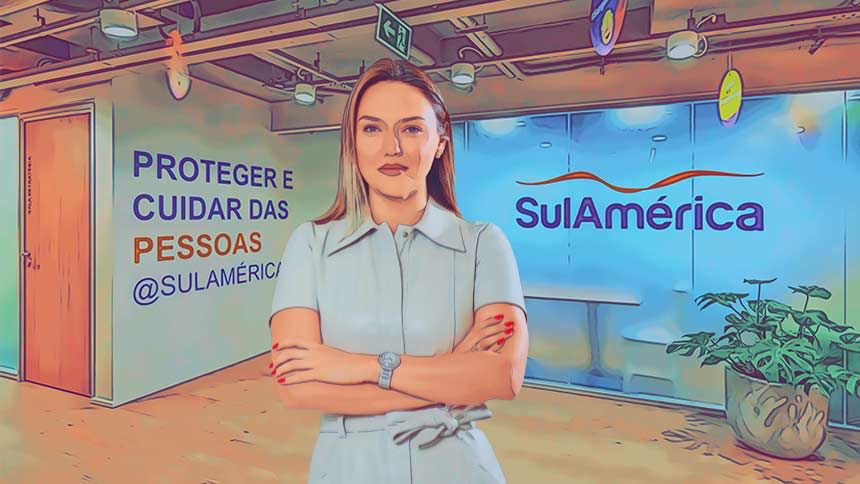

Responsible for almost 60% of Rede D'Or 's revenue in 2025, SulAmérica has defined its growth path to reach R$ 35 billion in revenue by 2026. And the path involves regionalized plans, outside the traditional axis, such as São Paulo and Rio de Janeiro, with lower costs, but also with a smaller margin for reimbursements for consultations and exams.
The model consists of guaranteeing access to regional healthcare networks – except for urgent and emergency situations, in which case national coverage is provided. An elective surgery, for example, can only be performed among the plan's local providers.
“We are looking at other regions, in addition to the obvious ones, such as Parauapebas [in Pará] and Feira de Santana [Bahia], which were not on our map,” says Raquel Reis, CEO of SulAmérica, in an interview with NeoFeed .
"This ensures care for many people and also helps us reduce reimbursements, since the person will be covered and will hardly need to seek a doctor outside our network," he adds.
Last year, the insurance and health plan operator achieved net revenue of R$ 33.2 billion, a 10.5% increase over the figure recorded in 2024. EBITDA, at R$ 2.3 billion, grew by 75.7%. Operating profit reached R$ 2.14 billion, a value 85.6% higher than that recorded in the previous year.
Currently, SulAmérica has 5.9 million beneficiaries in Brazil, with 3.2 million in the health area and 2.7 million in the dental plan. Of the health plan volume, two million are linked to large registered companies, and 1.2 million are clients of small and medium-sized enterprises (SMEs).
And precisely to surpass the 6 million customer mark, the focus now is on small businesses, especially the regionalized model. In the last two years, the SME segment has registered double-digit growth.
“The business segment is very solid and well-defined. And the growth driver is precisely the beneficiaries who come from small and medium-sized enterprises, with plans that offer lower prices, adjusted regionally,” says the executive.
With this, the company also wants to increase the number of beneficiaries enrolled in the co-payment plan, in which the monthly fee is 20% lower, and the patient pays a portion of the cost for consultations and exams. In the corporate segment, with more than 200 lives covered, this modality already represents 80%. In SMEs, it is still 40%.
"This is not intended to inhibit its use. On the contrary. What we want is for health insurance to be used correctly, with conscious use," he says.
According to Reis, SulAmérica's own employees – around 4,000 – and the more than 80,000 employees of Rede D'Or, in addition to their dependents, are included in the co-participation plan. "Everyone has it, at all levels. From the call center analyst to the chairman of the board," he assures.
This ultimately leads to a change in the patient's behavior and eliminates another problem, which is the waste in test requests. It is estimated that 20% to 25% of tests are never even picked up from the laboratories. When the patient pays a portion, the chance that they will "forget" to pick them up is lower.
Along with this more personalized health insurance model, SulAmérica, which was acquired in 2022 by Rede D'Or, also leverages growth through the direct accreditation of hospitals from Atlântica D'Or , a joint venture formed by the company founded by Jorge Moll and Bradesco.
Currently, the new network has six hospitals (three in operation, which were incorporated, and three under construction). This year, units are expected to open in Ribeirão Preto and Taubaté, in São Paulo. Rede D'Or alone now has 79 hospitals in 13 states.
“Increasingly, we are moving away from identifying ourselves as an insurance company and towards identifying ourselves as a healthcare company. And these hospitals in the Rede D'Or network are a base for expansion, which helps us to have greater negotiating power,” says the CEO of SulAmérica.
Data from the National Supplementary Health Agency (ANS) shows that today 53 million people in Brazil are covered by some type of private health plan. Including dental insurance, this number increases to another 35 million.
Although it is a significant number, larger than the population of Spain, for example, the health insurance coverage rate is 25%, compared to the 231 million residents in Brazilian cities. This shows the size of the growth avenue that SulAmérica intends to follow.
Crusade against fraud
While the planned growth strategy involves reducing the volume of reimbursements and promoting more conscious use of the health plan, SulAmérica is still expending considerable energy addressing the problem of fraud.
To that end, the company developed a plan to combat irregularities, which includes increasing the use of artificial intelligence (AI) tools, improving audits, and implementing anti-fraud governance.
In three years, the company managed to prevent R$ 450 million from being spent on improper payments. As a result of these actions, approximately six thousand beneficiaries were removed from SulAmérica's network between 2023 and 2025.
The results of initiatives against illegal medical reimbursement claims helped to drastically reduce the volume of claims in health and dental operations. Last year, the indicator reached 79.5%, an increase of 3.2 percentage points over 2024, and 7.8 points less than in 2023.
“We conducted a witch hunt against illegalities in reimbursements and requests for medical procedures, and we filed 800 criminal complaints against beneficiaries and service providers from 2023 until now,” says Reis.
Combating illegal practices in reimbursement requests, however, is not a problem unique to SulAmérica. The private health sector, which currently has 670 operators with beneficiaries, is facing this crisis.
Estimates from the Brazilian Association of Health Plans (Abramge) show that, between 2019 and 2025, fraud related to reimbursements alone caused losses exceeding R$ 12.9 billion to companies.
"Abramge expresses concern about the impacts of fraud in reimbursements in the supplementary health system, which generate significant losses and compromise the economic and financial balance of the sector," the organization said in a statement to NeoFeed .
In addition to the fraud cases, SulAmérica has also been protesting the high cost of medications and court decisions that require health insurance companies to fully cover the purchase costs for beneficiaries.
According to the executive, it is unreasonable for a pharmaceutical company to price a drug at R$ 8 million, for example, without any risk sharing with the laboratory.
“It’s impossible to understand how these prices are determined. In other countries, a strict criterion must be met to guide their use. In the first year of treatment, the industry receives 20% of the value. If the treatment progresses well in the second year, it receives another 20%. And if the patient dies, it receives nothing more,” says the CEO of the health plan operator.
In this sense, in her view, it is necessary for health insurance companies, the pharmaceutical industry, and the public sector in Brazil to work together effectively to avoid imbalances in this relationship. Currently, the greatest burden falls entirely on health insurance providers.
“One group [the health insurance companies] is at risk, and the other [the pharmaceutical companies] isn’t. Many of the health insurance companies are publicly traded companies that also have to sustain their own operations. That’s not a crime. We need to stop portraying the sector as the villain in this story,” says the SulAmérica executive.