


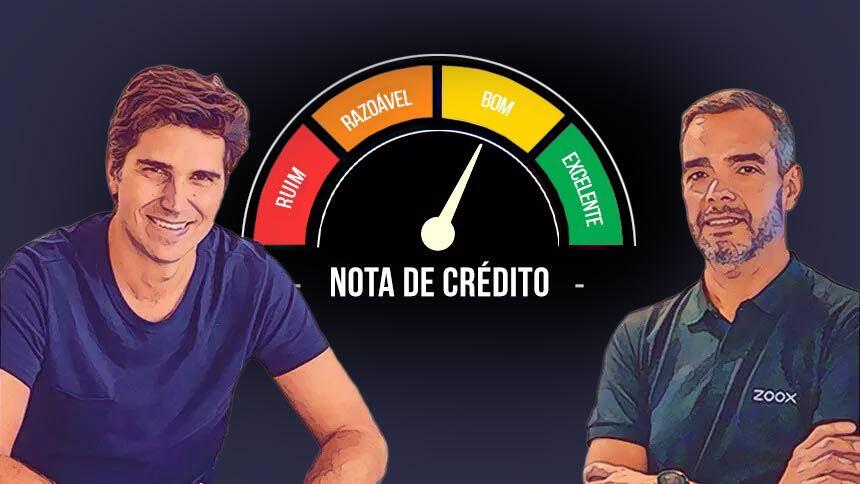
From offering Wi-Fi to hotels in 2010, Zoox has evolved into a much broader connection: using these wireless internet access points to capture data, which, in turn, has come to include and feed into the strategies of other sectors. From airports and retailers to banks, shopping malls, hospitals, and insurance companies.
Now, this big data – enhanced by generous doses of artificial intelligence (AI) – is the basis for a new venture. After a period of maturation, the Brazilian datatech company is officially entering the risk, compliance , and credit market, a market that includes names like Serasa Experian and Boa Vista, acquired by Equifax.
And, right from the start, with quite ambitious goals. "Our plan is to reach a total revenue of approximately R$ 1.1 billion in 2030," says Rafael de Albuquerque, founder and CEO, to NeoFeed . "And we understand that this venture capital business unit alone will account for practically half of that revenue."
Zoox estimates an addressable market of R$10 billion in this new frontier. Currently, a good portion of this figure is in the hands of credit bureaus . But, instead of naming these rivals, the startup prefers to adopt a different approach.
The fact is, however, that in this dispute, the company strengthened its team with an executive who was part of one of these rivals. In July 2025, André Nigro left Serasa Experian , after a nearly six-year stint, to lead the startup's new risk, compliance, and credit business unit.
“For us, the biggest enemy to beat is the current model of credit granting,” says Nigro, chief revenue officer of Zoox, when asked about the new competitors the startup is targeting. “If improving this process means fighting A, B, or C, that’s part of the game.”
Although it avoids directly mentioning the competition, Zoox doesn't hold back in criticizing the offers currently available in this segment. And one of the main arguments supporting this view is the current base of over 80 million indebted Brazilians.
“Why did they lend so much money to so many people who can’t pay the bill? Who was at fault in this story? The banks or the credit providers?” asks Albuquerque. “This data shows that the market is offering credit and assessing risk in the same way it did in the past.”
Nigro also doesn't mince words in making it perfectly clear what the datatech company's intentions are in this competition. "We are coming to disrupt and democratize this market, which is currently dominated by a few companies."
In detail
The formula that translates this thesis starts from the significant database that Zoox already has in-house, and which has been reinforced with an increasingly large volume of information captured, within the limits of the LGPD (Brazilian General Data Protection Law), from various other sources. Among them are call center companies and the credit bureaus themselves.
With this equation, the startup claims to have “99.9%” of data on people, companies, and the country's vehicle fleet, among other “data sets.” It emphasizes that this already enriched information is being further enhanced with an arsenal of artificial intelligence algorithms.
In practice, the platform goes beyond the metrics traditionally used to define credit scores and grant or deny credit, by bringing in a series of additional parameters to help in decision-making in these processes.
The available universe of information is vast. Among various other filters, it's possible to find out everything from the history of any legal proceedings to complete professional information about the owner of that CPF (Brazilian taxpayer ID), their purchasing power, whether they own companies, and even whether their partners are reputable or not.
“We have managed to develop this ability to understand everything about any person or company and to go into that level of detail,” says Albuquerque. “Today, no company in the sector can deliver that level of granularity.”
He further notes that, in addition to helping to create this "360-degree" view and suggesting scores, the AI embedded in the platform allows you to ask any question about that person or company. "You can ask, for example, if the AI would hire that person as CEO of your company," he says.
With the delivery of this package that combines detailed data volumes and artificial intelligence, Zoox's democratization discourse is not restricted to small and medium-sized enterprises. By providing access to this tool, the datatech company is also targeting large corporations.
Time to make some noise!
Now united as a business unit, this platform began development two years ago and has since attracted an investment of approximately R$ 50 million. In addition to strengthening the startup's database, this sum has been applied to areas such as expanding the technology team.
In the meantime, Zoox simultaneously tested the solution with a large bank – whose name was not revealed. And the numbers from this pilot help illustrate the startup's strengths in this new area . The client in question began using more than 120 variables in its analyses, compared to the 40 metrics it previously adopted.
“We had been operating in stealth mode because we weren’t ready and mature enough for this offering yet,” says Albuquerque. “Now, we are prepared and understand that it’s time to make some noise.”
Even while operating "quietly" behind the scenes, Zoox has already generated a good buzz with its platform. So much so that it already serves more than 170 clients with this offering. The list includes names like Santander, Bradesco, BTG Pactual, Mapfre Seguros, Tokyo Marine, Rede D'Or, and even Flamengo.
One way to scale these numbers will be to leverage the company's existing customer base. Currently, this portfolio consists of approximately 2,000 clients – in Brazil and 29 other countries. It includes names such as Accor, Fasano, Iguatemi, Allos, Burger King, and McDonald's.
With projections to achieve annual recurring revenue between R$170 million and R$180 million in 2026, Zoox, which has already attracted investors such as the Moll family – owners of the D'Or network – 2A Investimentos and Opus Capital, sees no need to raise new funds. At least, not this year.
“This is a strategy that we will look at much more closely in 2027. We still need to understand whether we should proceed with a fundraising round or wait a bit for a future IPO,” says Albuquerque. “For now, we are very focused on our operations and on scaling this vertical even further.”