


Almost five months after announcing its new CEO, Loggi is once again making changes to its leadership, placing an executive in charge who will dedicate themselves exclusively to improving the execution of operations and achieving financial sustainability.
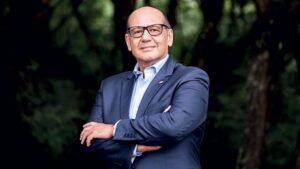
The logistics company has chosen Rafael Szarf to be the new president, taking over from Viviane Sales, who had been announced as the company's head in January, after having served as vice president of clients and revenue.
In an interview with NeoFeed , Loggi's chairman, Marcel Arins, stated that the focus now is not on testing business models, but on executing and ceasing to burn cash, thus consolidating the company's name in the last mile .
“We have 10% of the market and we want to double that share. And how do we gain market share? With operational excellence, being much more focused on operations than on any other area of the company,” he says. “That’s why we brought Rafael in.”
Szarf has experience in operations on his resume. He spent 11 years at British American Tobacco (BAT), part of it as head of logistics for the Americas and Sub-Saharan Africa, and was also COO of Zé Delivery , from Ambev, during the pandemic, when the operation experienced strong growth.
Loggi's restructuring involves separating the CEO's responsibilities. Szarf will assume the role of president, but with a total focus on operations. Arins will be responsible for other areas, such as legal and new business development, as well as finance, demonstrating that, in this new phase, the board and investors will be much more involved in day-to-day operations.
Loggi has already raised over US$500 million, according to Crunchbase. Its investors include CapSur Capital, Softbank , Monashees , and Microsoft . In its last funding round, in 2021, its valuation was close to US$2 billion.
Managing partner of CapSur Capital and a member of the company's board since 2021, Arins says that this new phase began to take shape last year, during the transition to the departure of Thibaud Lecuyer, who was CEO and CFO of the company for six years.
He explains that the ongoing restructuring at Loggi was aligned and designed in partnership with Viviane Sales, who brought Szarf to the company. He emphasizes that the former CEO is not leaving the company and states that she is assuming a position on Loggi's advisory board .
“I understand that there’s an impression in the market that she was a CEO who stayed for a short time, but she’s been with the company for two years, always focused on strategy, and she made this decision with us,” he says. “It wasn’t a move planned to happen in a short period of time. I thought it would take the whole year, but it was a pleasant surprise to make this change so quickly.”
With 50 integrated platforms, such as Shopify and Nuvemshop , covering 90% of the online retail market in Brazil for small and medium-sized enterprises (SMEs), in addition to partnerships with major market players, Loggi is now focused on improving the entire e-commerce journey, from the company and delivery drivers to the end customer.
The company is investing in restructuring its operations, strengthening the flow of information related to packages and improving the sorting process, even with the capacity to process 500,000 packages per day. Changes are also being made to the software that generates routes for delivery drivers to expedite deliveries, in addition to adjustments to routes with higher density.
Territorial expansion is not seen as urgent, considering the reach Loggi has achieved. The company has more than 250 branches spread across Brazil, ten cross-docking facilities, and more than 1,900 pickup and return points (PUDOs). Furthermore, Loggi is reviewing its asset base, promoting sales, as was the case with two operations in São Paulo and Rio de Janeiro to Mercado Livre .
“The company needed simpler and more focused execution control, and we are investing in that. We will control each stage of the operation to know exactly where each package is, what its status is, and why it may have been returned, until we achieve success in the customer journey,” says Szarf.
With annual revenue in the range of R$1.5 billion, executives project that they will begin generating operating cash flow and reach breakeven in the second half of this year, paving the way to stop raising new capital from investors.
“We don’t intend to be a cash-generating company that distributes dividends in the next two years. We need to gain market share, but the company needs to be sustainable,” says Arins.
Arins says the company invests around R$ 60 million per year in research and development, but admits that it has had difficulty transforming these investments into cash generation.
The chairman of Loggi also states that the plan is to invest R$ 100 million this year in last-mile technology and assortment, but this time, seeing the return on investment.