


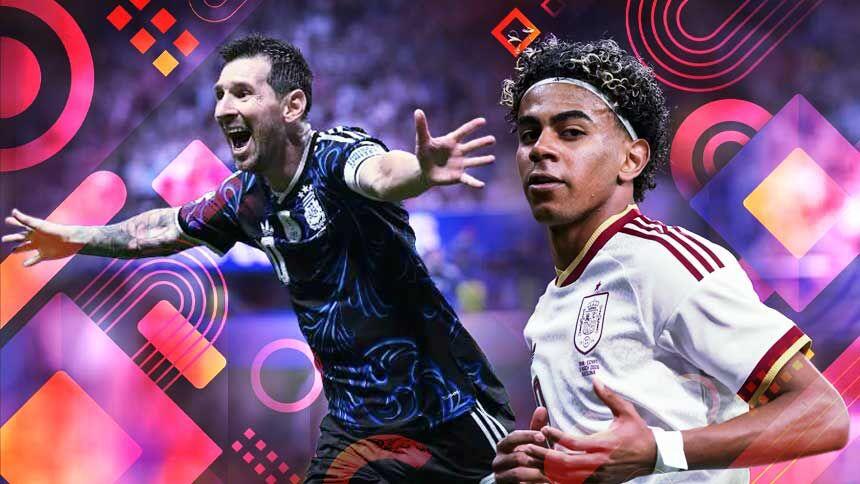

A ball with a motion sensor, semi-automatic offside, artificial intelligence at the service of the national teams, 3D avatars of the players, a body camera for the referee, and even the interference of the host country's president regarding red cards: the 2026 Men 's World Cup ends on Sunday, July 17, aiming to celebrate technology and zero errors.
But the clash between Spain and Argentina takes us back to the essence of grassroots football — the football played on the streets, on small pitches, courts, and even video games. Both teams showed that, above all, it's about a gathering of friends who love to play football.
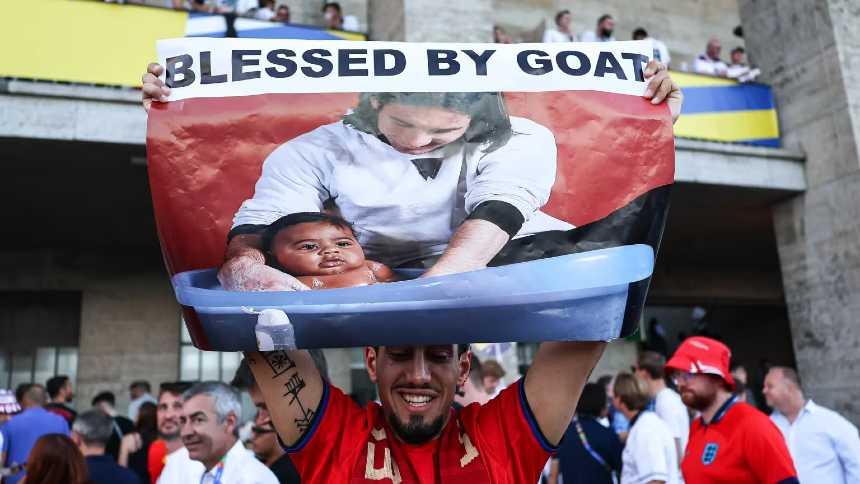
Lionel Messi and Lamine Yamal are undoubtedly the stars of the final, anchored by the historic 2007 photo in which the young Argentinian is seen bathing the baby who years later would become the great jewel of Spanish football. More than a premonition, the photo shows that the human side still prevails amidst the billions invested in turning football into an exact science.
The clash that decides who's at the top of the world isn't the result of complex mathematical equations, but rather the unequivocal victory of the intangible: street football, the organic chemistry of the locker room, and the genuine pleasure of a group of friends playing ball.
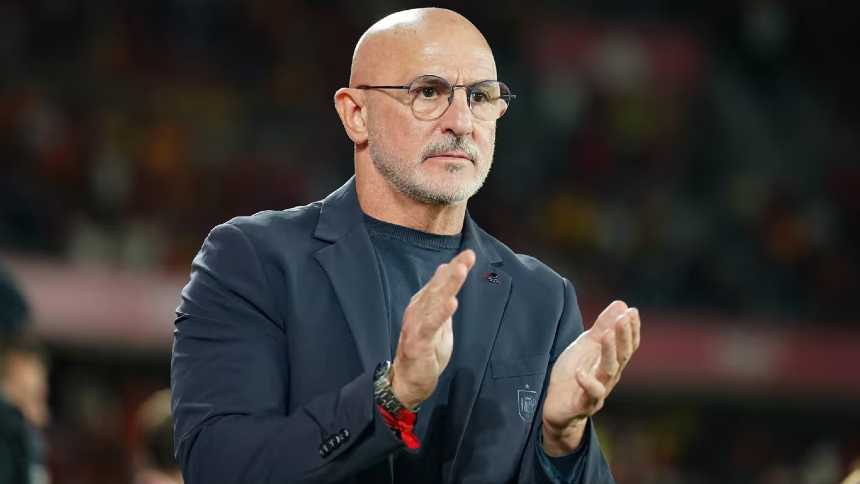
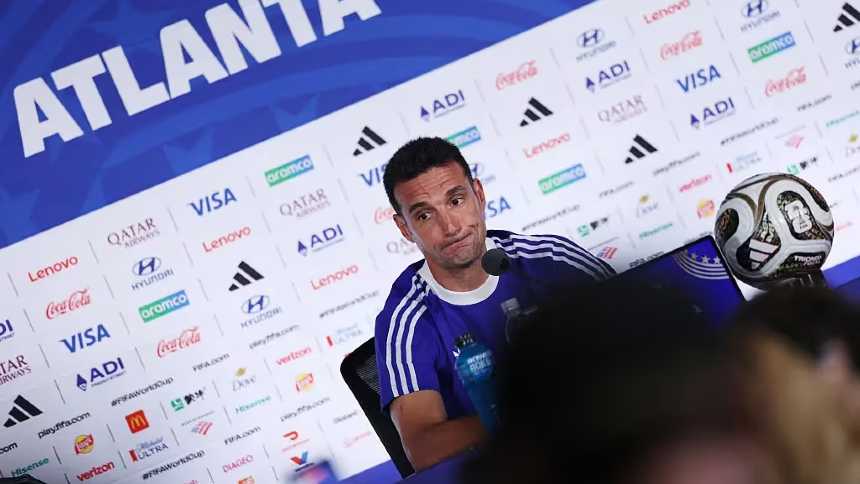
In the Spanish team, in addition to coach Miguel de La Fuente, eight athletes competed in the Tokyo Olympics in 2021, and another four in the Paris Olympics in 2024. On the Argentinian side, coach Lionel Scaloni, who played as a defender in the 2006 World Cup alongside Messi, took 16 champion players to the United States in 2022.
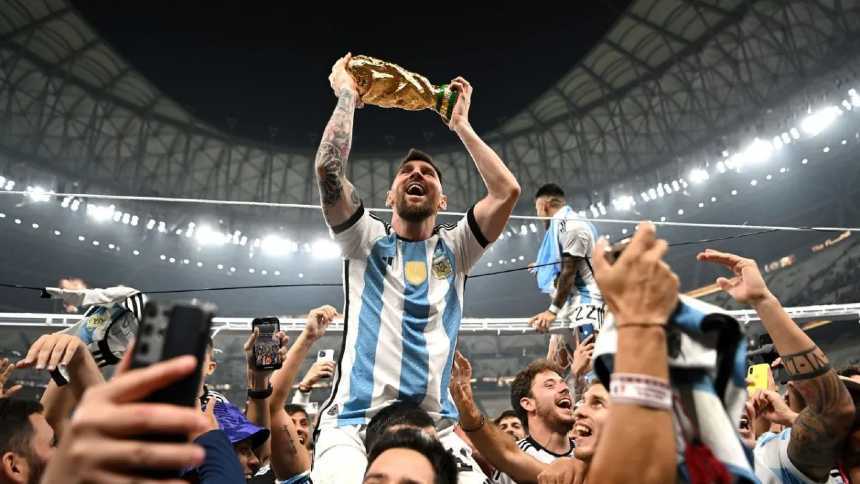
Messi could become the only captain to lift the World Cup trophy twice. More than Maradona , more than Beckenbauer, more than Dunga or Cafu.
The 2026 World Cup was the ultimate laboratory for venture capital funds, Silicon Valley tech companies, and European media corporations, which invested billions in artificial intelligence, next-generation wearables , and scouting software designed to eliminate human error.
The promise was clear: football had become an exact science, and the trophy would go to whoever had the best engineers and the most rigorous processes.
Elite European football has bought into this growth -at-all-cost logic. France and England arrived at the tournament as the "unicorns" of the football market — squads valued at over €1.5 billion each, according to Transfermarkt, functioning as heavy corporate structures, where each player operated almost as a business unit shielded by sponsorships and image consulting.
On the pitch, the result flirted with bureaucratic failure. France, hampered by rigid tactical processes and a dressing room fractured by egos, succumbed to Spain's more fluid game. England, with the Premier League's most expensive "engineers" monitoring every player in real time, played predictable and soulless football, falling short precisely when improvisation was required.
Childhood accomplices
Spain's success in the World Cup is the result of a long-term strategy that focuses on integrated culture, not on acquiring isolated players. The backbone of La Roja in 2026 is composed of young players who seem to play with their eyes closed: Yamal, Gavi, Pedri, Nico Williams, and Dani Olmo.
The group's greatest competitive advantage has not been identified by any talent detection algorithm used by European clubs. It lies in the "Childhood Partners" factor, a psychological dynamic that describes a bond where partners share the same growth history, childhood memories, and life transitions.
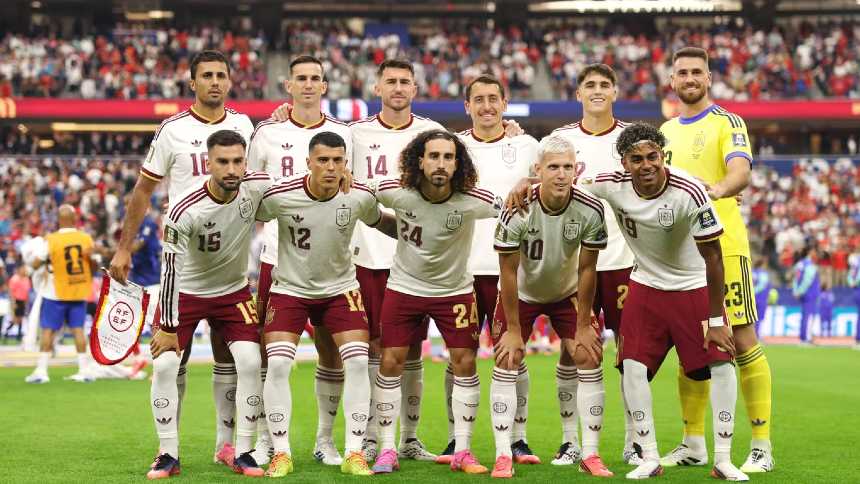
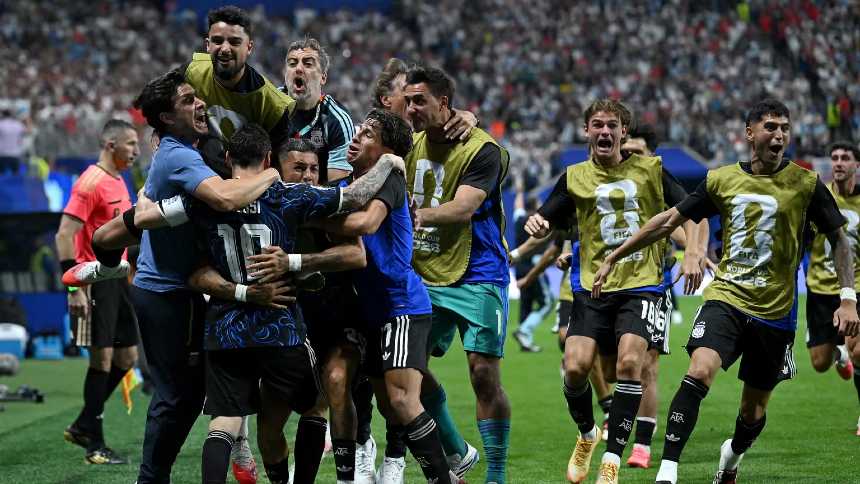
When Yamal breaks down the right wing, he doesn't need to look into the box; he knows exactly where Nico Williams will be, because they've been repeating this movement since they were 14 years old. It's not a team hastily assembled every four years: it's a product that's been tested and iterated on with the same "founding team" for years on end.
The result? Spain has the highest average of first-time passes in the 2026 World Cup, at 68%, and the highest automatic coverage metric (91%), which assesses how long (in fractions of a second) a teammate took to close the empty space, according to Opta Sports, a leading global sports data and statistics company.
If a teammate misses a tackle and loses the ball, the other runs twice as hard to recover it, not out of contractual obligation or pressure from the boss, but out of loyalty to his friend. And those on the bench know they have a relevant role in this team: proof of this is midfielder Mikel Merino, who, in two games, came on and scored the winning goal for Spain in the final minutes.
La Fuente's role is much more like that of a product manager: instead of imposing rigid, geometric tactical schemes that confine players to fixed positions, the Spanish coaching staff acts as a facilitator of talent.
Argentina and street football
If Spain represents the integrated academy of talent, Argentina is the triumph of "street football" elevated to the level of high-performance corporate art. And at the center of this decentralized and hyper-efficient structure is Lionel Messi.
Argentina plays a style of football shaped by the essence of street football, dirt fields, and improvisation against tight defensive systems. Where the algorithm sees a dead end, the street player sees an invisible window of opportunity.
But, without a doubt, the common thread in all of this is captain Messi. The 2026 team plays, runs, and bleeds for the love of the number 10. It's a classic case of inspirational leadership that breaks down any barrier of traditional corporate governance.
"When you play alongside your biggest idol, physical fatigue simply disappears. We run until our lungs give out because we know that if we give him a clean ball, he'll solve the problem," Enzo Fernández told D'Sports after the semi-final.
This is a perfect "society" structure. Messi creates space, draws defenders, and decentralizes tactical decisions. The young players, endowed with inexhaustible physical energy, provide the operational support (the famous "dirty work" of marking and regrouping) that the genius needs to operate at his peak.
At 39, Messi walks more, observes more, and uses the intelligence he's always had to choose with surgical precision the five seconds when it's worth accelerating. And he's always free to receive the ball.
The team organizes itself around where Messi decides to position himself, and he has complete freedom to choose when to get involved in the play and when to let others handle it. "He is the greatest player in the history of football, there is no doubt about that anymore," said Scaloni before the grand final.
Jorge Valdano, a World Cup winner with Argentina in 1986, highlights the star player's ability to slow down the chaos. "He seems to stroll across the field, but it's still impossible to stop him. He keeps slowing down, but nobody can figure out his tricks," he said in an interview with TyC Sports . "He's an inexplicable genius."
Even before the final, Messi has already been involved in 12 goals for Argentina. He is the tournament's top scorer with eight goals, in addition to four assists. He is running significantly less than he did in 2022. While everyone else plays, Messi rests to use his energy when it's time to make the decisive strike.
Keeping possession of the ball at their feet can be the deciding factor for the "owners of the street". But the summary of the final might really be in that 2007 photo, when a 19-year-old Argentinian, recently crowned the best in the world, was playing with a Spanish baby without imagining that one day they would share the pitch for a trophy.
Twenty years later, Messi and Yamal meet again, surrounded by sensors, algorithms, and billions of dollars worth of data—without needing to consult any of them to instinctively know where their friend is.
Regardless of who wins, the 2026 World Cup is already sending an uncomfortable message to those who manage billions in sports technology: the most valuable data in football remains the only one that no sensor measures.