


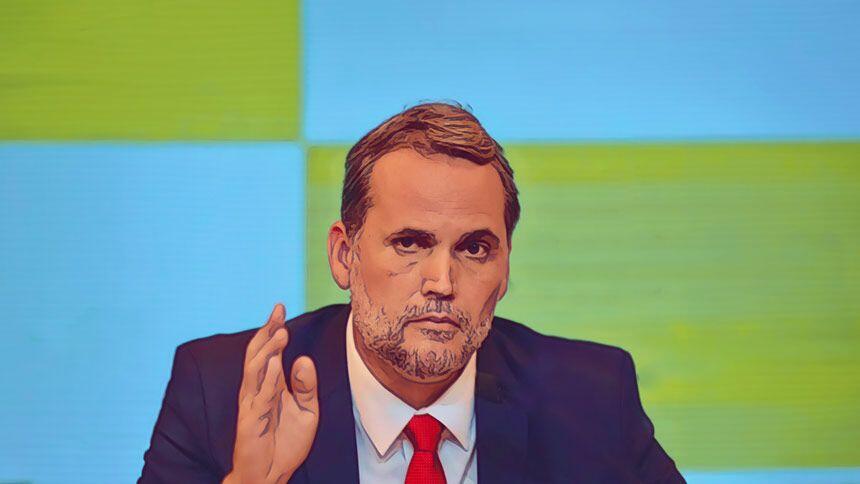
Brasilia — A respected career technician in the government and with the confidence of the Presidential Palace, the Minister of Planning, Bruno Moretti, said in an interview with NeoFeed that the watchword for the 2027 Budget, which the next President of the Republic will inherit, will be "stability" and "not surprising economic agents," without causing noise in the market.
When submitting the 2027 Budget Guidelines Law [LDO] project to the National Congress on April 15, the Ministry of Planning projected a primary surplus target of 0.5% of GDP. Economic analysts, however, are already raising doubts about whether the target is feasible and how the next government, whoever it may be, will be able to meet it.
As mandated by law, the Executive Branch still has until August 31st to submit the Annual Budget Bill [PLOA], which is essentially the federal budget and is currently being drafted by the economic team and the Civil House. Moretti explains that the general outlines of the bill are already being discussed in meetings of the Budget Execution Board [JEO], but the idea is to signal that there will be no changes to the fiscal rules.
“We will provide guidance, send important signals to the market in 2027, showing that there will be no change in fiscal rules, in a process of consolidation. So, I don't foresee any disruption or abrupt change,” Moretti stated.
“We will prepare a draft budget for 2027 signaling that we will meet the target without any difficulty. And we are aiming for stability in expectations, without any surprises, without causing any disruption. The budget proposal will not contain any surprises,” he added.
Moretti also spoke about his role in the government, which is already seen as leading within the Executive branch and by congressional leaders. In just over a month, he has led the government's discussions surrounding the critical minerals bill and was an active voice in the design of the package to contain fuel prices. He sees this role as specific and explains that it was at the request of the Presidential Palace.
Before returning to the Planning Ministry (he is a career employee there), he was Special Secretary for Government Analysis in the Civil House, during the administration of former minister Rui Costa. He also served as chairman of the Board of Directors of Petrobras.
Check out excerpts from the interview below:
You have been involved in various issues within the government, some of which are not even within the scope of Planning, such as rare earths and fuels. Do you intend to expand the responsibilities of the Ministry during your term?
When I joined the government in 2023, I was on loan to the Senate. I'm a career civil servant in the Planning Ministry. It's a fact from my career that helps facilitate discussions there [in Congress]. And there was a request from the Presidential Palace for me to discuss critical minerals with Minister Alexandre [Silveira, of Mines and Energy]. But in those two examples, there was a very strong fiscal component: the tax breaks on fuels, and also on minerals, with tax credits to incentivize that sector. But there was a directive for me to support it, without prejudice to sectoral debates.
But has there been any request from President Lula or the Presidential Palace for you to get involved in other negotiations?
I can't predict the future. I believe that, always within my responsibilities—fiscal and financial instruments to induce investment, fiscal issues—all of this is relevant to planning. In the debate about fuels, for example, there was a discussion about agreeing on a fiscal neutrality strategy. It's normal to be called upon for this. I don't think there's a general [government] formula. It will depend on each case.
During Tebet's administration, the Planning Ministry was seen as playing a timid role behind the scenes, even regarding the budget, and the Finance Ministry often led the discussions. Now, is there room for the ministry to regain a more prominent role?
I don't see it that way. I worked closely with Minister Simone at the JEO [Budget Execution Board], supporting Minister Rui [Costa, former Chief of Staff] and Minister Miriam [Belchior, current Chief of Staff]. In fact, budgetary decisions will be made collectively there, and a good part of her team remains, the people from the SOF [Budget and Finance Secretariat]. They are excellent technicians; the ministry is very technical. And I don't have the responsibility to change or reshape the ministry. We will continue to work in coordination with the JEO.
So, the idea is to continue in a way, despite the different profiles?
Yes. That's continuity. We will provide guidance, send important signals to the market in 2027, showing that there will be no change in fiscal rules, in a process of consolidation. So, I don't foresee a disruption or abrupt change.
The market still has doubts, mainly regarding the 2027 fiscal target. How can we overcome these concerns and deliver the promised surplus?
Since 2023, legitimate doubts have been raised [about fiscal adjustment]. We will prepare a draft budget law for 2027 signaling that we will meet the target without any difficulty. We will present it on August 31st. And we are aiming for stability in expectations, without any surprises, without causing any disruption. The budget proposal will not contain any surprises, with the gradual inclusion of court-ordered payments within the target, as we anticipated.
So, can the market expect no changes to fiscal rules or any new developments in next year's budget?
Our point here is to propose to Congress a budget bill without any noise, very different from what we inherited. Because the budget we inherited was full of 'sub-budgets': the case of the outstanding court-ordered payments; the ICMS tax on fuels that was deemed unconstitutional by the Supreme Court. So, the watchword is stability, not surprising economic agents, society.
And how can we reassure economic agents that it is feasible to meet the target next year?
Our role will largely be to show that the rules will be followed without causing disruption.
On the eve of the presidential campaign, there is already discussion in the market and among the opposition to the government about ending the fiscal framework. Will you propose some kind of revision to it, as Haddad hinted?
This discussion is premature; it's not for now. Now, very differently from 2022, it's about showing that the goals are being pursued even amidst a war [in the Middle East], and within the fiscal space we have. That the fiscal rules are being preserved, both in terms of spending and revenue, bringing the target center to 0.5% [of GDP, in 2027]. It's fundamental to demonstrate that in an election year it won't be necessary to revise rules or gain fiscal space.
And for this year, will it be possible to reach the primary surplus target in an election year? Many economists predict a deficit.
For 2026, we understand that yes [the surplus target is feasible]. We are cautious in the Budget Execution Plan (JEO), we have R$ 40 billion, referring to the phasing of the spending limit, which provides savings and security for us. We are aiming for the spending limit and targets within what Congress has set for us. For 2026, the goal is to provide greater stability to stakeholders and society, and to show that there will be no disruptions or disruptions.