

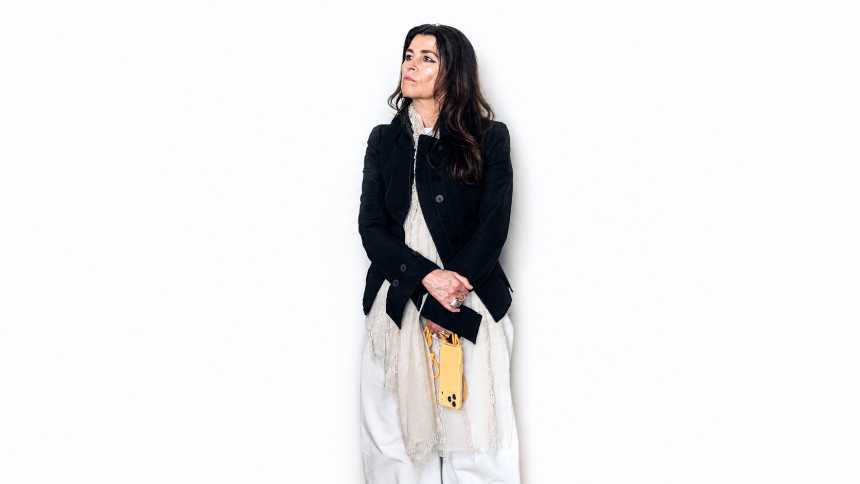
A thin line of light pierces the darkness. That is the earliest memory of British artist and set designer Es Devlin. She was two or three years old when she fell into the River Thames in London . Among stones and bubbles in the murky water, she spotted a luminous thread towards which she tried to swim.
“When I saw a line of light crossing the curtain as a child, it seemed like a portal to me. I continue to anchor each day with a morning meditation on the line of light I see when I wake up,” she says in an interview with NeoFeed . “Certain leitmotifs run through my work like rivers, connecting territories. A line of light cutting through the darkness stems from my earliest memory.”
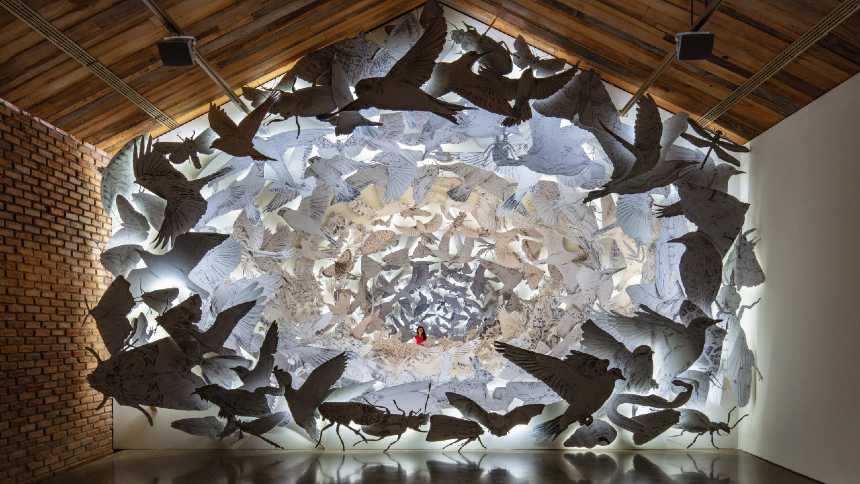
The image reappears in several of the artist's works. But its most direct reference is in Falling , one of the six installations in Sou o Outro do Outro , on display at Casa Bradesco, in São Paulo.
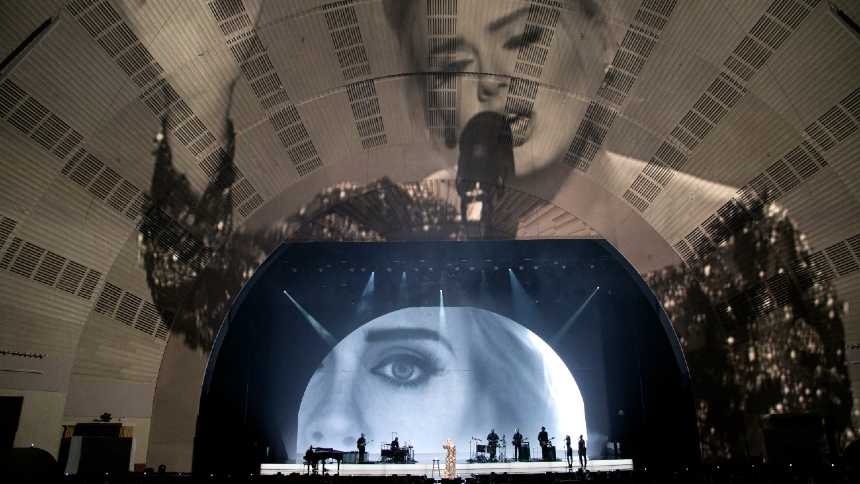
Celebrated for her set designs for theater, operas, and shows by artists such as Lady Gaga , Beyoncé , Bad Bunny , Adele, and U2, as well as her collaboration with Fernando Meirelles and Daniela Thomas on the opening ceremony of the Rio Olympic Games in 2016, Devlin arrives in Brazil for the first time without performing on stage. But "spectacle" remains the most accurate word to describe her work.
Concise in the number of works—only six—the exhibition is monumental in scale. The visitor always begins in darkness to enter each installation. It's like the opening of the curtains in a theater or the lighting of the lights in a show.
In less than two months, between March 15 and April 30, the exhibition attracted 55,000 visitors and has already become the most visited exhibition in the space since its inauguration in 2024.
“I think there is an impulse in our bodies for collective ritual,” says the artist. “I learned the mechanics of encounter and ritual in multiple forms: 100,000 people singing the same song in a stadium is a formidable physical phenomenon; a single person entering the universe of a painting in a gallery is another mode of transformation.”
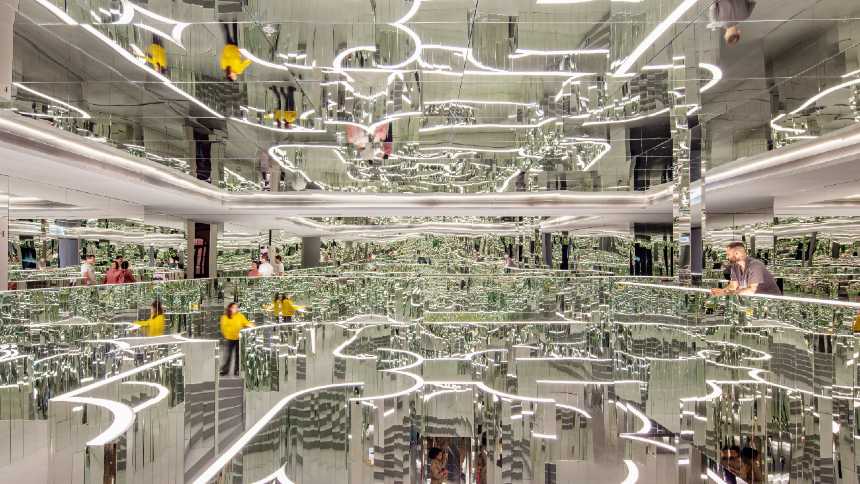
Originally conceived for a Chanel activation, the artwork Mirror Maze is presented in São Paulo for the first time in a version constructed with real mirrors, not acrylic surfaces. The result is a sharper and more dizzying reflection. As visitors walk through the path, they see their image multiply, disappear, and merge with that of another. It is from this tension, in fact, that the exhibition's title originates.
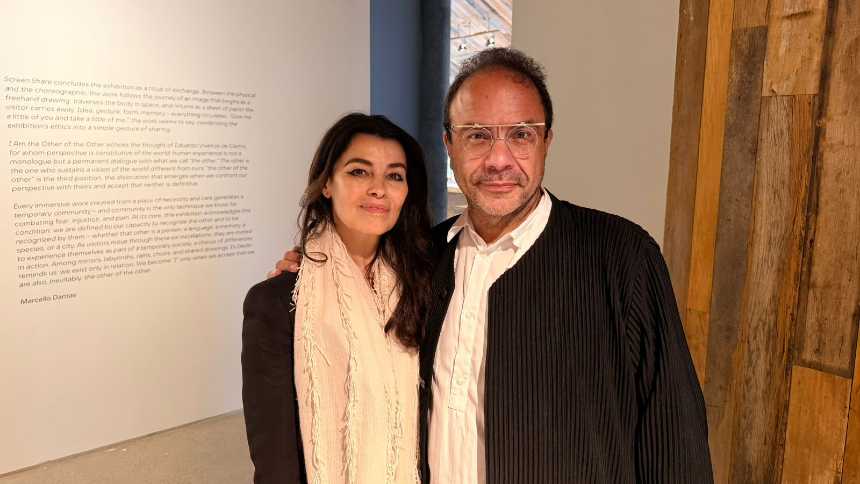
“The question was: how to navigate this avenue that is identity? How to speak of oneself subjectively and, at the same time, speak of the encounter with the other?”, curator Marcello Dantas , who introduced the artist to the work of anthropologist Eduardo Viveiros de Castro, tells NeoFeed .
Formulated from Amerindian indigenous thought, Viveiros de Castro's theory of perspectivism argues that different beings inhabit the world from their own perspectives. Dantas transposes this repertoire into the exhibition—something familiar to Devlin's universe.
“In my installation works, I combine poetry, light, sculpture, and music in an environment sculpted for an audience, a way of reminding us of our interconnectedness, of our continuity with all beings and with the universe,” explains the artist.
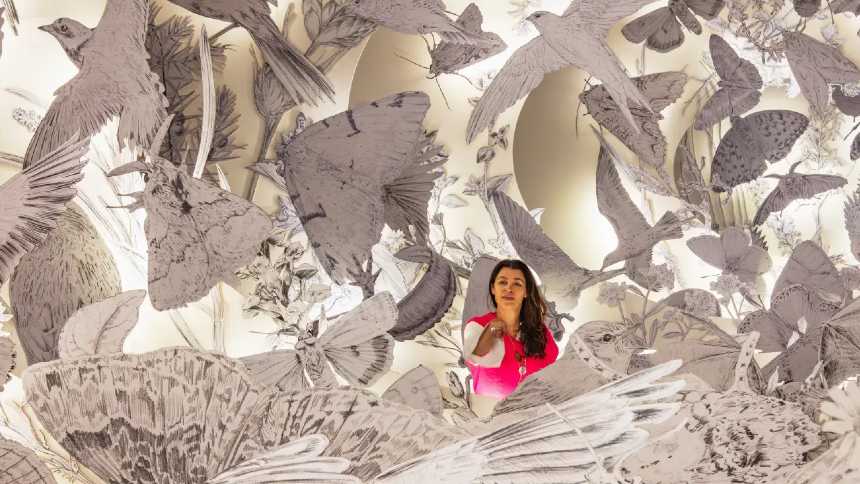
The idea reappears in Come Home Again, an installation in which a chorus of birds and voices of refugee immigrants suggests the interdependence between humans, animals, and cultures.
Lyrics and music
As a child, encouraged by her parents to learn an instrument, Devlin chose the violin. The discipline and persistence required by music migrated to the center of her creative process.
“I adopted this routine and this method of practice. Today, I don’t play the instruments I learned very often, but I feel that this rhythm and routine have translated into different forms of expression,” he says. “I treat everything as repetition, rehearsal, practice, reiteration: constantly failing to achieve exactly what one desires.”
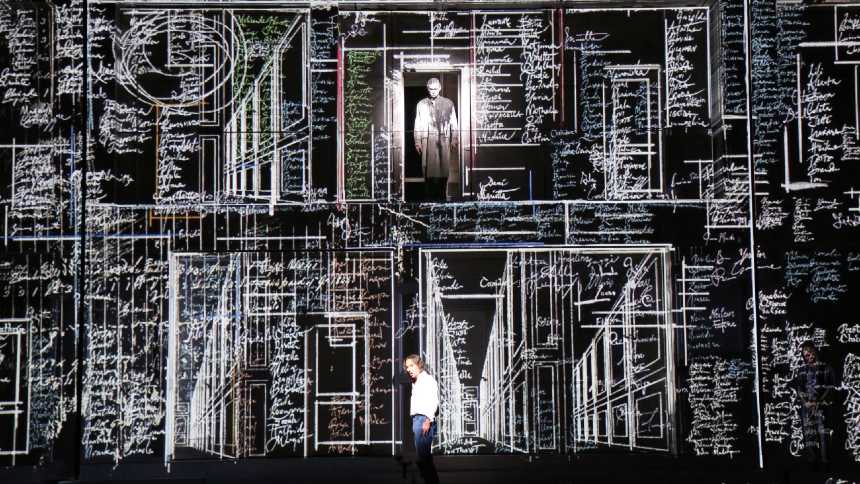
Another central theme of his work is the word. It is no coincidence that Infinite Library opens the exhibition by bringing together shared narratives and suggesting that no imagination is entirely individual.
When she's not working with texts by writers, playwrights, or composers, Devlin takes on the writing herself. A graduate in English Literature from the University of Bristol, her voice guides much of the installation in the exhibition.
For the past ten years, the artist has also been composing the music for her installations with her band, Polyphonia. "I see each new project through the lens of other projects that are simultaneously under development in the studio, so there continue to be interesting and fruitful intersections with collaborative works done with musicians and playwrights," she states.
Vacuum cleaners
It's difficult—if not impossible—to walk through the exhibition without encountering someone filming, photographing, or taking a selfie . As if visitors were trying to capture, on their cell phone screens, some of the awe caused by encountering the artwork.
“Every time you are touched by something, you want to share it,” says Dantas. “The world is full of images, some of them absurd. Es’ images are not absurd; they are touching. And people’s impulse is to share what has touched their hearts.”
Part of the strength of Devlin's work lies precisely in converting emotion into image, in constructing visual experiences that are almost irresistible to the eye and, inevitably, to the cell phone camera. Even so, the artist maintains an ambivalent relationship with contemporary digital logic.
“Cell phones are like vacuum cleaners: they suck up our shadows,” says the artist. “Our digital dust, our digital waste, our digital shadows are busy generating a lot of money for a small number of people,” the artist states.
But Devlin is not proposing a nostalgic rejection of technology. In A National Portrait for the National Portrait Gallery, a project on display in London until October, she invites the public to use their cell phones to contribute to a constantly evolving collective portrait.
"I'm trying to find ways to stitch our digital shadows back onto our feet so we can dance with them."