


Beaune - Smooth, creamy and homogeneous, its color varies from pale yellow to light brown. Acidic and aromatic, it has a spiciness that is more noticeable in the nose than in the mouth. Dijon mustard is probably the most famous in the world.
Dijon today, however, is more of a recipe than a place. A word on the label that, for many, still evokes the sophistication of French cuisine.
Although it originated in the Burgundian capital, Dijon mustard can be produced anywhere in the world, as long as certain specifications are followed, such as fine grinding of the seeds and the addition of acidifying liquids — vinegar being the most common.
It was there, of course, that medieval France transformed the condiment into a prestigious gastronomic delicacy. The true mustard of Burgundy, however, goes by the name of mustard… from Burgundy . This one, indeed, has held the Protected Geographical Indication (PGI) seal since 2009.
The certification requires that its production take place in the region southeast of Paris and use only local ingredients, including mustard seeds and white wine — which gives it its own identity, inseparable from its place of origin.
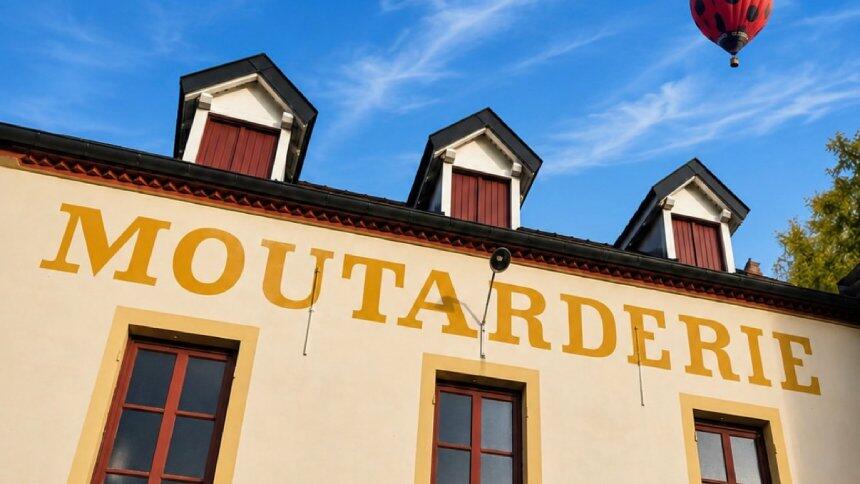
In Beaune , about 50 kilometers from Dijon, the Moutarderie Edmond Fallot perfectly illustrates the close link between product and territory.
Operating since 1840, it endures as a family business in a sector increasingly dominated by giants such as the Anglo-Dutch Unilever, owner of the Amora and Maille brands, and the German Develey, owner of Reine de Dijon.
At the helm of the business is Marc Désarménien, grandson of the founder Edmond Fallot and one of those responsible for the movement that led to the recognition of the PGI (Protected Geographical Indication).
After spending his childhood observing the production of mustard, he took over as CEO in 1994. Since then, he has been modernizing the operation. In 2020, for example, the company invested €4.3 million in production improvements.
All this to keep pace with an expanding market. Valued globally at US$10.53 billion, the sector is expected to grow at a compound annual growth rate of 5.1% until 2031, according to the consulting firm Mordor Intelligence. This trend is largely driven by the appreciation of handcrafted products with a strong regional identity.
Long before this movement gained momentum, however, Fallot had already made the preservation of centuries-old know-how one of its distinguishing features. To give you an idea, the grinding of the grains continues to this day in stone mills.
Slower and less aggressive than modern industrial processes, the technique helps preserve the natural oils of the seeds and gives the mustard a richer texture, enhancing the original characteristics of the grain.

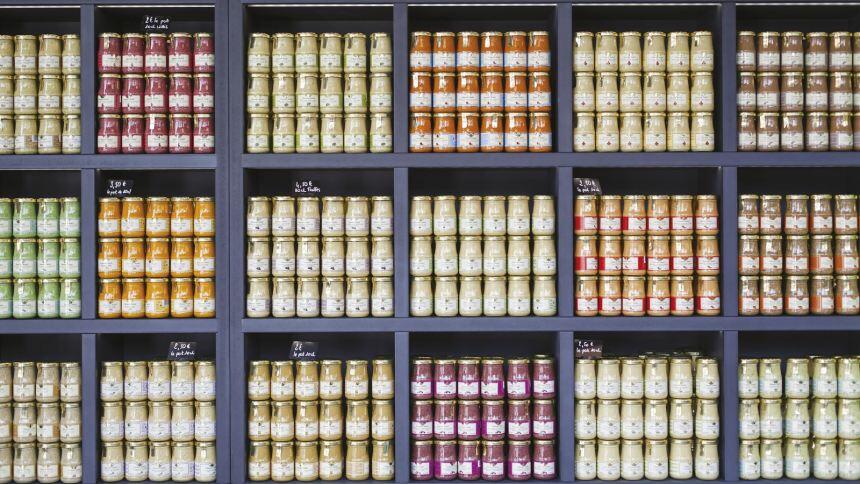
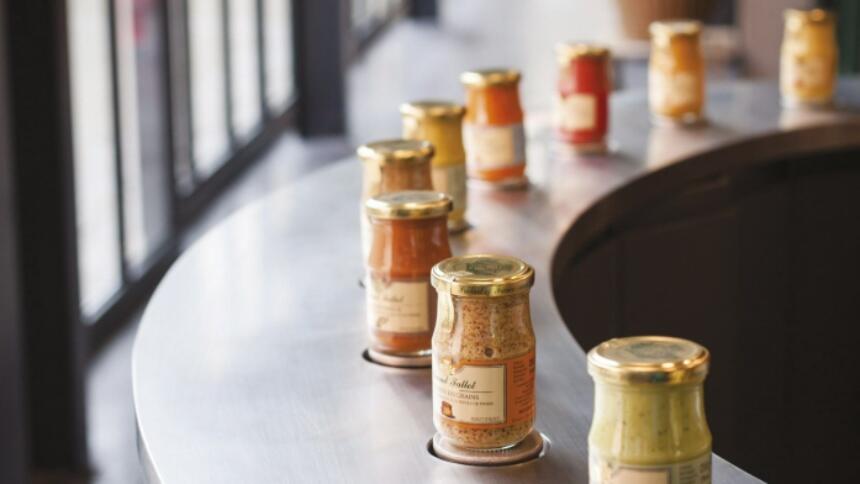
Besides Burgundy mustard, Fallot has a catalog with dozens of other varieties. From Pinot Noir, Ethiopian coffee, cocoa, paprika, honey and balsamic vinegar, blackcurrant... and even Dijon mustard. Every two years, new flavors are launched, explains Désarménien, in an interview with NeoFeed .
Another strategy of the brand is to establish partnerships with renowned chefs. One of the most important is with the restaurants of the legendary Bernard Loiseau (1951-2003). Today, under the direction of Louis-Philippe Vigilant, the La Côte D'Or restaurant, located in the Le Relais Bernard Loiseau complex in the Burgundian town of Saulieu, holds two Michelin stars.
For the restaurant, Fallot produced original recipes, such as mustard with seaweed, with hazelnut blossom, with coriander, and even with tea. In addition, the mustard shop also created exclusive versions for the three-Michelin-starred Maison Troisgros and for the two-Michelin-starred chef Jean Sulpice.
"We've been working with chefs for a long time. We've been supplying Maison Troisgros since my grandfather's time," says the CEO. "Chefs appreciate authentic and traditional products—and mustard is an indispensable element of French cuisine because it's used in a variety of sauces."
Fallot's fame has transcended French borders. From New York to Tokyo, more than half of its production is destined for export. The United States leads the ranking of major buyers, followed by Germany, Japan, and Australia.
Some versions are also offered in Brazil, in luxury markets and gourmet shops. At Casa Santa Luzia, in São Paulo, for example, a 310-gram jar of tarragon mustard costs R$ 96.
The Canadian grain crisis
At first glance, the obligation to use 100% Burgundian ingredients might seem like an obstacle. But it was what saved Fallot from the 2022 mustard crisis. That year, a heat wave affected the harvest in Canada, the world's largest producer of the spice's seeds. Responsible for 28% of the seeds consumed worldwide, the country ironically has France as its main customer.
In 2023, due to shortages in the French market, the brand's stores in Beaune and Dijon had to post a sign on their doors: "Only 5 jars per person," as reported at the time by the newspaper Les Echos .
Three years later, the situation is quite different. Always crowded, the Beaunoise boutique receives tourists from all over the world who fill their baskets with a wide variety of mustards. The 105-gram packages cost €3.
In addition to being an important point of sale, the company's historic headquarters in Beaune has become a tourist attraction. Fallot has even developed two types of tours, both including mustard tastings. For 2027, a third type of visit is already being prepared, using virtual reality to enhance the immersive aspect of the experience.
Mustard is the third most consumed condiment in the world, behind only salt and pepper. And Fallot aims to remain one of the most sophisticated representatives of "fine mustards".
"It's a bit easier now than in the past, because the market segments high-end products well," says Désarménien.
"We have this good reputation and success thanks to the strategic choice of my predecessors to invest in top-quality mustard," he adds.
The brand's total production is 2,500 tons annually. Only a fraction of this volume is marketed under the PGI (Protected Geographical Indication) label. In the most recent data from the official French government publication, L'Annuaire des Entreprises , in 2024, Fallot recorded revenue of €13.3 million and a net profit of €2.1 million.
This is a small amount compared to the 95,000 tons of all types of mustard produced annually in Burgundy, according to the Ministry of Agriculture. The region is the undisputed leader in the sector, accounting for 85% of national production and 50% of European production.
In such a vast universe, Fallot is a grain. But a brilliant (and aromatic) grain, enough to be considered one of the most respected mustard producers in France—and the world.