

The 2026 World Cup enters its most cruel and fascinating phase this Sunday, June 28th: the knockout stage. From this stage onwards, known as the " playoffs " or round of 32, the standings give way to direct and merciless confrontation. Whoever wins, stays; whoever loses, goes home.
There is no room for error. If the score is tied in regulation time and persists into extra time, the dreaded penalty shootout comes into play — a formula by which, in the last edition of the World Cup in 2022, Brazil was eliminated by Croatia and Argentina became champion by beating France .
The penalty shootout is today a laboratory of psychological pressure, behavioral science, and money. More than a duel between penalty taker and goalkeeper, it defines the financial fate of national teams, sponsors, and broadcasts.
The penalty kick has ceased to be merely the end of a game and has become the epitome of contemporary football: precision, pressure, monetization, and technology concentrated in the same instant. In fractions of a second, the decisions made by penalty takers and goalkeepers trigger a domino effect that instantly echoes in stock markets, corporate offices, and global betting servers.
In this World Cup, with revenues projected by FIFA at around US$9 billion, including US$3.9 billion in media rights and US$2.7 billion in commercial sponsorships, the penalty kick concentrates the highest financial density per square meter in the world of sports.
Not by chance, the penalty kick has become a natural experiment in modern microeconomics. Economist Ignacio Palacios-Huerta, from the London School of Economics, analyzed 1,417 penalty kicks recorded between 1995 and 2000.
The study, published in the American Economic Review in 2002 and co-authored with Pierre-André Chiappori and Steven Levitt, reached a conclusion that shocked the academic world: during penalty kicks, players operate under Nash Equilibrium Theory for mixed strategies, a theory very well explored in the film A Beautiful Mind (2001).
In practical terms, this means that penalty takers need to randomize their choices so perfectly that the goalkeeper's decisions become statistically indifferent to the outcome of the penalty kick. All done with a precision that would rival even the most highly trained financial market agents.
The unpredictability of a penalty taker has become a significant corporate asset. Brands like Nike and Adidas have performance clauses tied to success in short-format competitions, such as the World Cup.
Being eliminated in a penalty shootout instantly depletes a player's market value, generates losses for sponsors who have to cancel advertising campaigns, and reduces the digital engagement of corporations associated with instant failure.
However, good performance in penalty shootouts can radically change the lives, both in the real world and in the digital world, of goalkeepers who until recently were completely unknown, such as the charismatic Vozinha from Cape Verde.
The "action bias"
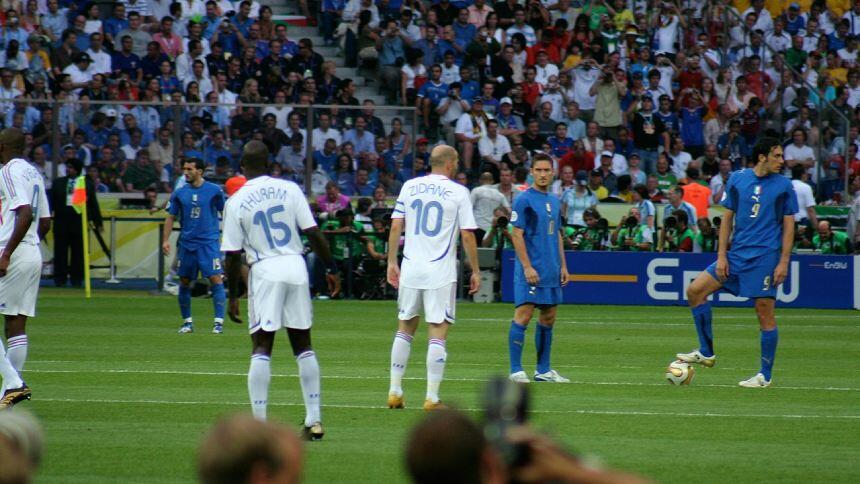
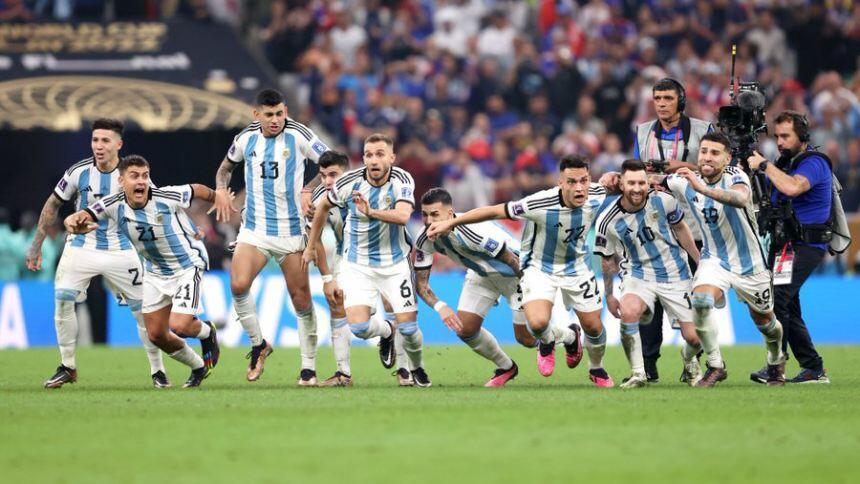
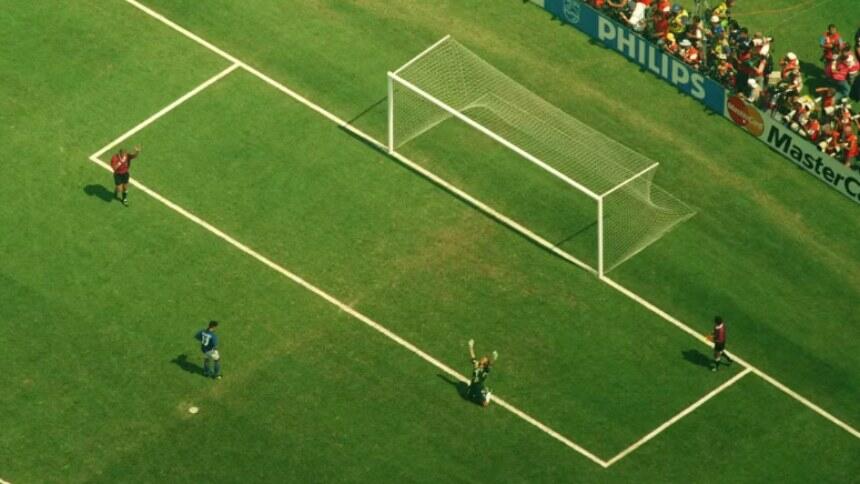
The physics of a penalty kick is unforgiving. Researchers from the German Sport University Cologne and the Vrije Universiteit Amsterdam calculated that the ball travels the 11 meters between the penalty spot and the goal in 500 milliseconds—that is, half a second. The goalkeeper, however, needs at least 600 meters to jump to one side, and a second to reach the corner. The available time is structurally less than what is needed. Whoever reacts after the shot loses.
Saving a penalty kick isn't a reflex. It's anticipation. A 2023 study published in the journal Frontiers in Behavioral Neuroscience showed that elite goalkeepers modulate brain activity during the kicker's run-up, reading hip angle and shoulder position.
Two years earlier, research published in PLoS ONE revealed that, in two-thirds of correctly anticipated penalties, the brain activated the motor imagery circuit, not the visual one. The goalkeeper making the save doesn't see the shot. He simulates it using memories of his own previous penalty kicks.
And yet, standing still would be better. Michael Bar-Eli, from Ben-Gurion University, published an article in the Journal of Economic Psychology in 2007 that became a benchmark in behavioral economics applied to sports: goalkeepers who stay still in the center save 33.3% of penalties — twice as many as those who dive to the right or left.
Only 2%, however, remain still. The explanation lies in what Bar-Eli called "action bias": the emotional and social cost of conceding a goal without moving seems unbearably greater than the cost of jumping to the wrong side.
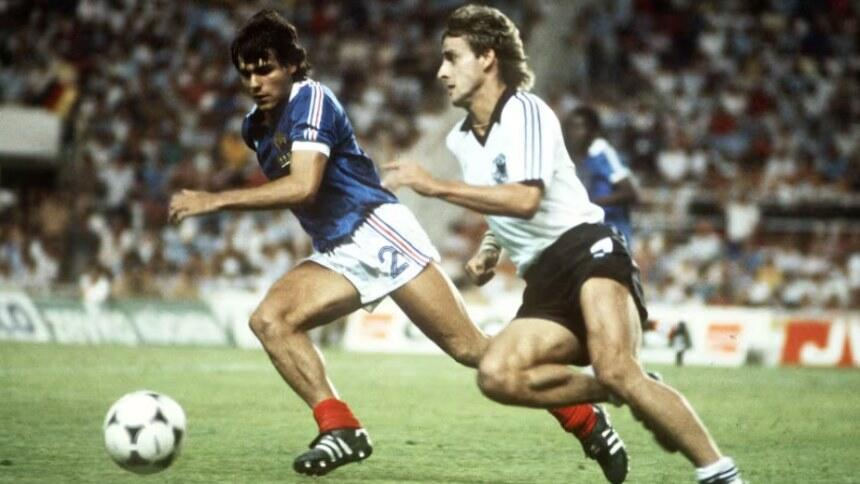
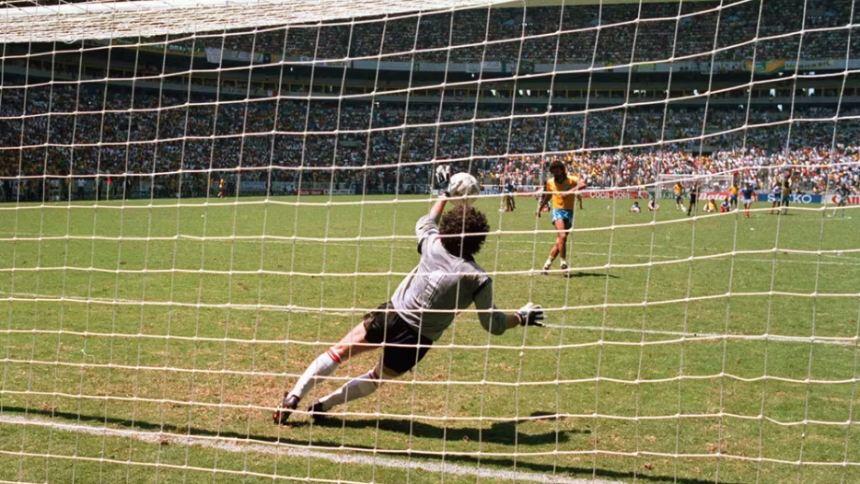
The first penalty shootout in a World Cup took place in 1982 in Spain, and it debuted in a giant classic: the semi-final between France and Germany, which ended in a thrilling 3-3 draw. The Germans defeated the French generation of Platini, Tigana and company. Four years later, the same French got their revenge, eliminating Brazil, with Sócrates and Zico, also on penalties.
Since then, the 11 meters separating the penalty spot from the goal line have shaped the history of football and the finances of the sport.