

Havana — In San Antonio de los Baños, about 40 kilometers from the Cuban capital, the Escuela Internacional de Cine y Televisión (Eictv) is currently experiencing one of the most delicate moments in its history. Founded in 1986, the school is struggling to maintain its operations amidst the worsening economic crisis plaguing the country.
Considered fundamental to the development of Latin American audiovisual production, the institution faces a reduction in international cultural support and is subject to structural difficulties affecting virtually all sectors of the island—which, according to director Susana Molina, directly impacts the daily operations of Eictv.
“Inflation and the lack of access to foreign currency, essential for imports in Cuba, make food, transportation, and basic services more expensive for students and teachers,” she says in a conversation with NeoFeed . “Electricity cuts and the energy crisis affect workshops and filming, and the difficulty in importing technological equipment limits the updating of teaching resources.”
The monthly fees of around R$3,000 paid by approximately one hundred students cover only 30% of the school's expenses. The remainder comes from workshops, master's programs, seminars, international agreements, cooperation projects, donations from European and Latin American cultural foundations, and Cuban institutional support.
According to Molina, in addition to economic difficulties, political changes in Latin America have also weakened historical support for the institution. At the height of progressive governments in the region, between the mid-2000s and the early 2010s, especially between 2005 and 2012, EICTV was seen as a symbol of Latin American cultural integration and artistic resistance.
Today, although it remains internationally respected, its influence no longer plays a strategic role for many governments.
Nevertheless, the school insists on preserving the project conceived almost four decades ago by Gabriel García Márquez, Fernando Birri, and Julio García Espinosa: to create a multicultural space focused on training filmmakers from the Global South.
"Cultural favela"
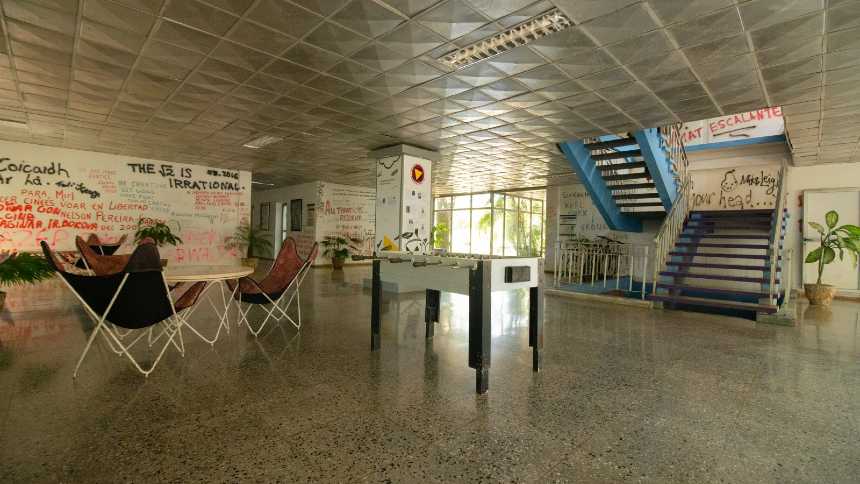
Surrounded by trees, simple buildings, and open areas, the school operates far from the traditional university model. Between classrooms, dormitories, and common areas, different languages mingle while cinema permeates practically every conversation. "This is a community, a 'cultural favela'," Molina defines it.
The informal atmosphere contrasts with the historical weight of the institution, created amidst the cultural effervescence of the Festival Internacional del Nuevo Cine Latinoamericano in the 1980s. At that time, filmmakers from the region were discussing the lack of infrastructure capable of supporting their own audiovisual production on the continent.
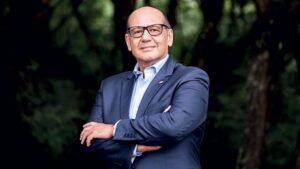
“The same theme always came up in the festival meetings: we needed to train our own technicians and filmmakers,” recalls former director-general Jerónimo Labrada, to NeoFeed .
The idea gained traction after Fidel Castro challenged the participants at the meeting with the question: "What more can we do for Latin American cinema?" The answer came almost immediately: to create a school.
In 1985, the Fundación del Nuevo Cine Latinoamericano (Foundation of New Latin American Cinema) was launched, presided over by Gabriel García Márquez. A year later, EICTV was inaugurated in Cuba. “It all happened very quickly. They say some buildings were built in 15 days, working day and night,” says Labrada.
Despite Cuban state support since its creation, the school maintains a certain degree of autonomy from the government. "The school is absolutely independent of the Cuban state, even though it is the main collaborator," says Labrada. "No one comes here to tell us what we should teach."
According to management, the financial model is divided between a Cuban structure—responsible for food, maintenance, and mobility—and an international structure, which assists in acquiring technology, donations, and cultural projects.


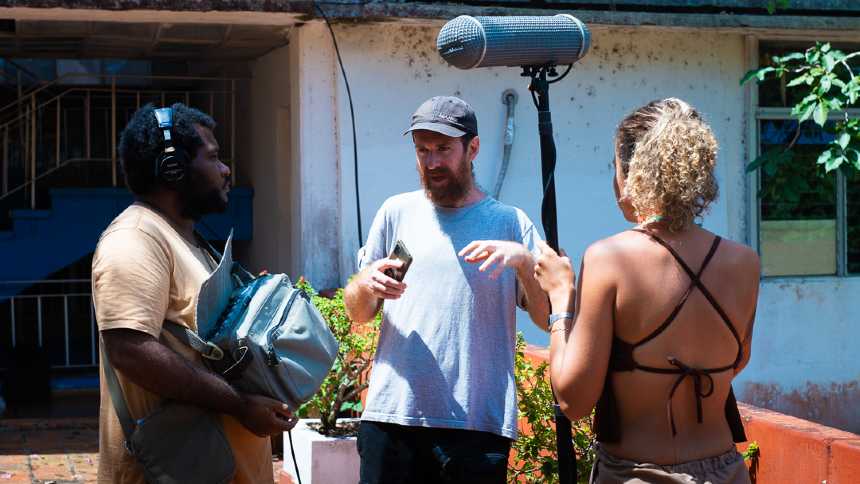
Even amidst material limitations, Eictv continues to receive students from different parts of the world and maintains a predominantly international faculty. "Only about 20% of the professors are Cuban. The rest come from everywhere," Labrada proudly states.
In the hallways, Spanish predominates, but it naturally coexists with Portuguese, English, and other languages brought by the students. The school has already received students from Vietnam, African countries, Australia, and different regions of Latin America, in an environment marked by the coexistence of distinct cultures, religions, and identities.
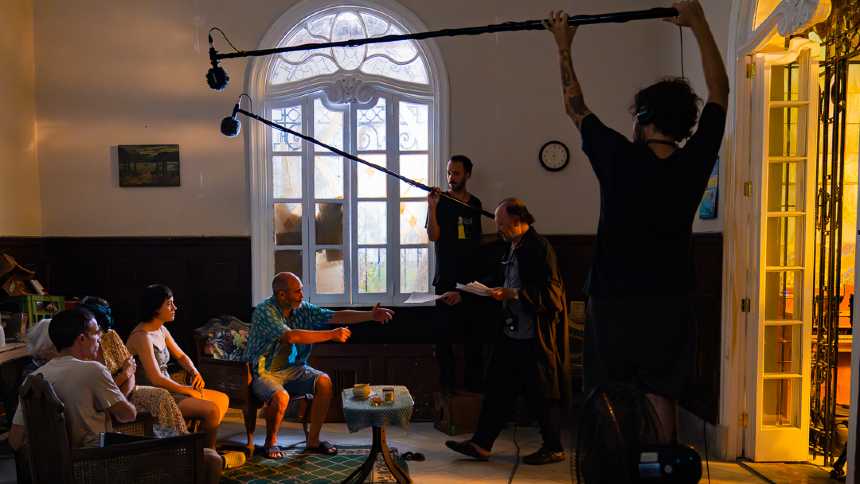
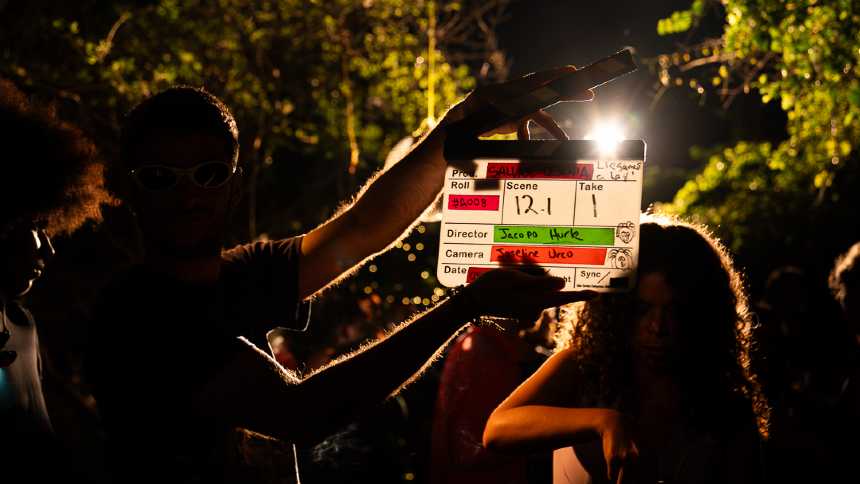
The teaching model remains based on practice. "Our model is learning by doing," says Molina. "Even the theoretical subjects end with practical exercises." The workshops are constantly renewed, always led by professionals in the field.
Throughout the three years of the regular course, students rotate through different roles until they develop their own unique language, in a training that is increasingly focused on auteur cinema.
For almost four decades, Eictv has trained professionals who now work in festivals, production companies, and audiovisual projects in various countries. According to the administration, this legacy maintains the school's relevance even in a less favorable context.
The Brazilian presence remains one of the strongest within the school, both among students and teachers. Among them is Ailton Jesus, from Ceará and a final-year student in the regular course. Analyzing the Brazilian art scene, he describes an increasingly competitive environment for those who wish to make a living from art.
“I feel that artistic practices in Brazil have become increasingly complex. There are opportunities, but there are also many people competing for space,” he tells NeoFeed .
Even amidst the Cuban crisis, Eictv strives to preserve what has made it an international benchmark: the intense interaction between artists from different countries and the idea that cinema can still function as a tool for critical thinking and Latin American cultural integration.
Wandering around campus, amidst cameras, scripts, and conversations under the trees, one gets the feeling that the school continues to endure, also as a symbol of cultural permanence in a country marked by crisis.
When asked what message he would leave for young people who want to pursue a career in film, Labrada smiles: " Mucha suerte " (Good luck).