

Bergen and Oslo — On a trip through Norway , you can see how seriously this Nordic country, one of the richest in the world, takes coffee and, consequently, breakfast. Coffee shops are scattered throughout the major cities, confirming Norway's second-place ranking among nations that consume the most of the beverage in the world.
According to the latest World Population Review survey, published this year, per capita consumption there reaches 9.9 kilograms annually, second only to Finland , with 12 kilograms. To give you an idea, Brazil is on the same list, in 14th position, with 5.8 kilograms per inhabitant.
Because Norway has a predominantly cold climate and little sunlight (with prolonged periods of darkness in winter), the ritual of breakfast is also highly valued. After all, the first meal of the day needs to convey that feeling of comfort, helping people wake up, warm up, and ensure they have the energy for the day ahead.
The Norwegians even hold a national competition each year to elect the best hotel breakfast (both chain and independent). Next Thursday, October 30th, the 2025 winners will be announced at the 19th Twinings Best Breakfast awards ceremony, organized by Haugen-Gruppen, a company that imports, sells, and markets food and beverages in the Nordic countries.
Every year, over 400 hotels are evaluated from January to October in the competition sponsored by the English tea brand. The jury is made up of renowned chefs , sommeliers , representatives from the Haugen-Gruppen, and hotel breakfast enthusiasts.
“The criteria for choosing the best are location, food quality, type of food, coffee and tea selection, local products, sustainability, ambiance, service, and the complete consumer experience,” says Lene Risa Andersen, head of marketing at Haugen-Gruppen, in an interview with NeoFeed .
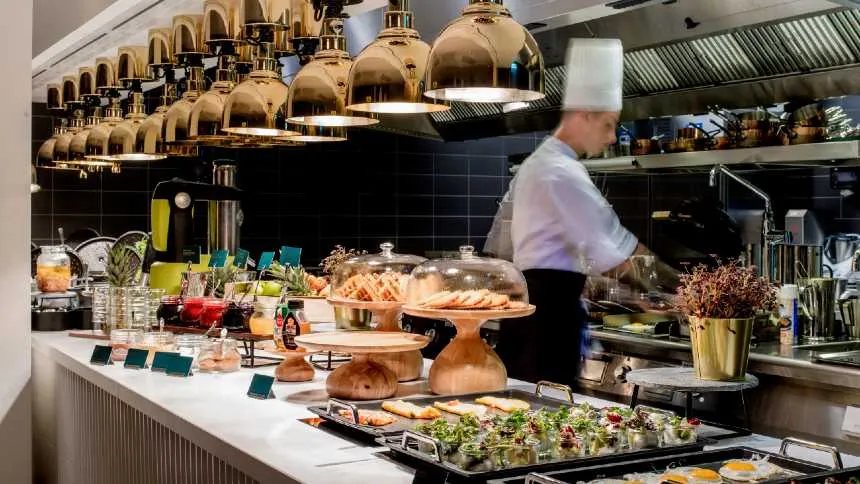
What makes breakfasts at Norwegian hotels so special? "They are prepared by chefs , who are usually famous and considered very important to the hotel (with the same weight as a restaurant chef)," comments Andersen, referring to the refinement in the preparation of the food, regardless of whether it is a buffet.
Often, guests see the chef cooking for the hot food stations which offer, in addition to the traditional eggs, bacon and mushrooms, restaurant-worthy specialties. Such as the homemade liver pâté (in the shape of a meatloaf), to be spread while still warm on one of the breads from the vast selection — where whole-wheat and seeded creations reign supreme.
More than a hundred options usually await the customer, displayed in spacious areas. Among the expected items, such as yogurts, jams, fresh fruits and vegetables, the deli section always catches the eye. There are many cheeses (including the local one called brunost , which is brown, strong and sweet) and cured meats (such as leg of lamb), in addition to cod roe caviar, mackerel in tomato sauce, various types of smoked salmon and pickled herring.
“Breakfast is what sets a hotel apart from the competition. Since many hotels in Norway use the same architects, there isn’t much difference in interior design. Maybe one hotel offers more pillows than another, but it’s almost the same thing,” Morten Malting, the food and beverage director of Scandic hotels, told NeoFeed .
Local research indicates that, when choosing a hotel in the country, breakfast is the top criterion. "It comes even before price and location," says Malting, noting that the majority of Scandic's clientele is Norwegian. Next come guests from other Nordic countries, such as Sweden and Denmark , followed by the United Kingdom , Spain , Germany , and the Netherlands .
From the network, the Scandic Nidelven hotel in Trondheim, the country's third largest city (after Oslo and Bergen), is the most awarded in the competition. "We've won 15 times," Malting celebrates, adding that the entire network strives to offer local products, as well as gluten- free, lactose- free, vegan , and organic foods.
The influence of Brazilian coffee
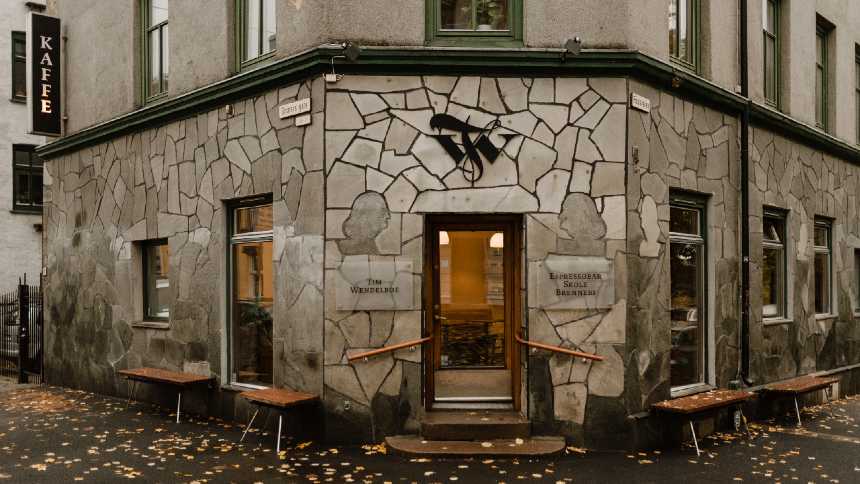
Norway's passion for coffee is also reflected in the international reputation of its coffee shops. In this year 's "The World's 100 Best Coffee Shops" list, the country secured fifth place with Tim Wendelboe, a coffee shop located in Oslo since 2007 and named after its owner.
“We have no secrets. It’s just hard work,” says Tim Wendelboe, winner of the 2004 World Barista Championship, to NeoFeed . “We’ve worked closely with most of our suppliers since 2010, seeking to improve everything from harvesting, processing, drying, storage and logistics, as well as testing different cultivation techniques and varieties.”
His company imports green (unroasted) coffee from Kenya, Honduras, Colombia, Ethiopia, El Salvador, and Mexico. “Norwegians mainly drink filtered coffee. Since the available coffee is of quite high quality, they drink it black,” he says. “But most people here prefer lighter roast coffee, compared to what is more commonly consumed in Brazil, where the preference is for dark roasts.”
According to Wendelboe, there are several reasons for Norway's strong coffee culture. "More than a century ago, our people consumed alcoholic beverages every day, which obviously brought problems," recalls the businessman. "Because of this, the Church and the Labour Party began promoting coffee as a better alternative, focusing on its social benefits."
Another reason could be that Norway had access to higher quality coffee. "After theSecond World War , Norwegians started trading cod for coffee with Brazil, stopping buying cheaper, lower quality coffee like Indonesian robusta," he says. "Since Brazilian coffee tasted good, we started drinking more of it."
And how would Wendelboe classify Brazilian coffee today? “Since Brazil is a major producer and such a large country, we can find high-quality coffees, but also lower-quality, mass-produced ones,” he explains. “I love the coffees from the mountains of Espírito Santo, for example. They are the ones normally produced on smaller farms.”