


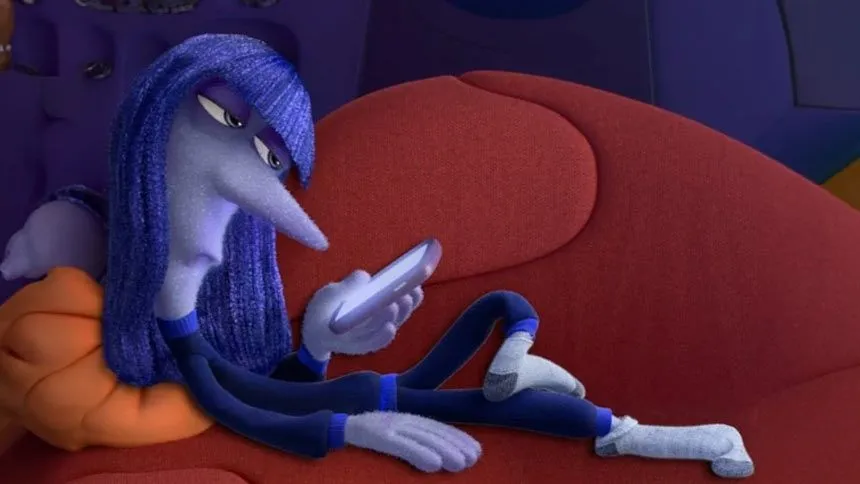
Lethargic and indifferent, she's always sprawled on the sofa. Rarely are situations interesting enough to distract her from her phone. And when she does deign to lift her head, she rolls her eyes, yawns, and responds with sarcastic jokes and biting criticism; or, failing that, with irritation.
Her name comes from the French word "ennui," meaning boredom. And she is one of the four new emotions in the movie Inside Out 2 , currently showing in Brazilian cinemas. Along with Anxiety, Shame, and Envy, she marks Riley's arrival into adolescence.
With a silhouette inspired by a strand of softened spaghetti, a sweatshirt and socks, and a face and posture of someone who is deeply bored, the Pixar character reignites the debate about the relationship between boredom and digital media.
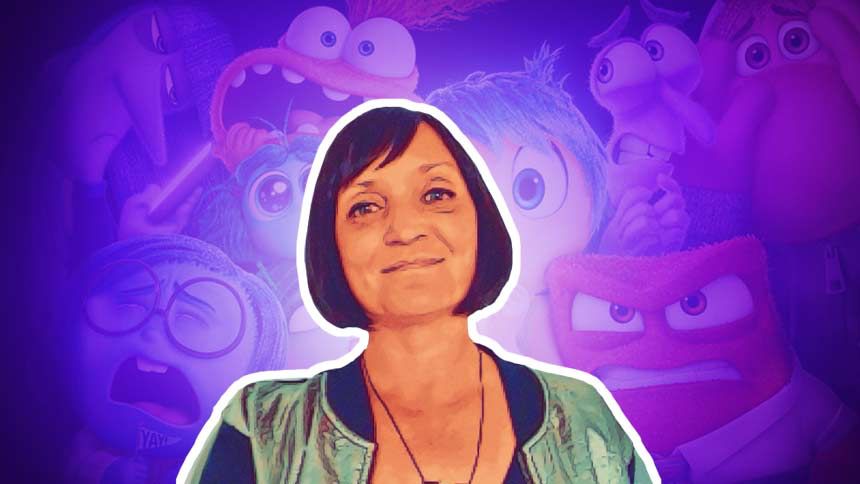
One of the most active voices in the new science of boredom is Tina Kendall, associate professor of film, media and communication studies at Anglia Ruskin University in Cambridge, England, and PhD in critical theory from the University of California, Davis, in the United States.
“Although online entertainment is widely promoted as a ‘cure’ for boredom, recent research shows that the more we use these technologies to distract ourselves, the more bored we risk becoming,” she says in a conversation with NeoFeed . “It is boredom that fuels and sustains our engagement with these platforms and apps.”
It's no wonder Ennui is glued to her smartphone.
While all other emotions must go to the "command center" installed in Riley's brain, the apathetic Ennui, with her knack for not caring at all, does everything from her device, scrolling endlessly through her feed.
“Boredom thrives on repetition,” argues Tina. “The stimulation of repetition can create a negative feedback loop of increasingly superficial boredom—a form of boredom that keeps resurfacing but never takes root enough to ‘mature’ into active reflection.”
Despite her blasé attitude (and because of it), Ennui protects Riley. She helps to lower the (always high) intensity of the emotions typical of life at age 13. And she tries to keep the teenager away from anything that isn't worth her time and energy or that could embarrass her—including her parents.




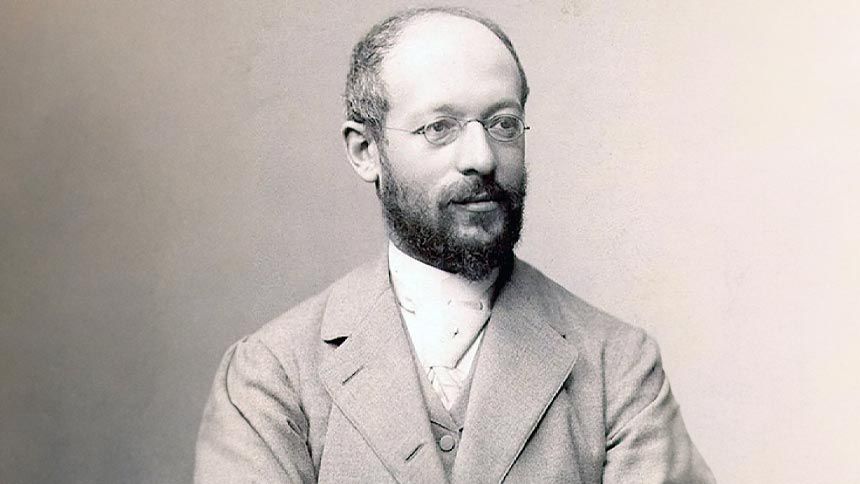


Ancient man did not get bored — perhaps the nobility and clergy did, at very specific moments, triggered by obvious causes. Existential boredom, that feeling "that nothing is worth doing," as defined by the Portuguese poet Fernando Pessoa... this boredom emerged as a concept at the beginning of the 19th century, in the effervescence of discoveries and inventions that would underpin the technological advances of the 20th century.
Since then, thinkers from all fields of knowledge have debated the role of feeling in human development (see in the images above what some of them have said about the topic) . The prevailing belief today is that boredom can be both positive and negative.
And here, the definition of the British psychoanalyst Adam Phillips gives a sense of the possibilities opened up by "that suspended state of mind (...) the climate of diffuse unease that contains the most absurd and paradoxical desire, the desire for a desire."
The "desire of a desire" that we don't know what it is, much less how to satisfy it.
“Boredom can lead to harmful behaviors, such as compulsive screen scrolling and wasting time on that activity, or it can serve as a call to action, encouraging us to engage more or try something different,” says Tina.
Below are the main excerpts from the interview with the Anglia Ruskin University researcher on NeoFeed :
How does boredom influence the content and use of new media?
In my forthcoming monograph, Entertained or Else: Boredom and Networked Media , to be published in 2025, I will assess how boredom is increasingly being instrumentalized to drive people's engagement with networked entertainment. I will focus primarily on how boredom has been channeled on two levels: the discursive and the technical.
How does the discursive level occur?
Network culture portrays boredom as a hidden threat and presents streaming entertainment and social media platforms as tools to help individuals "manage" the "boredom problem." We are constantly told that if we download the right software and apps and follow the recommended feeds, we will never be bored again.
And what happens from a technical point of view?
These platforms and programs were designed to automate our gestures—so that we click or swipe screens before we even have time to realize we're bored. The time it takes for boredom to turn into conscious reflection and decision-making has been significantly reduced.
In other words, the more bored we feel, the better it is for tech companies.
Sure! The paradox is that, while online entertainment is widely promoted as a "cure" for boredom, boredom permeates the entire digital culture. Boredom is the feeling that fuels and sustains our engagement with platforms and apps, further boring us and generating revenue for social media and streaming corporations.
Can you give an example of how this process works in practice?
See what happened during the COVID-19 pandemic. TikTok explicitly capitalized on the threat of boredom during social isolation—which fueled the platform's meteoric rise. With the #BoredInTheHouse challenge, TikTok managed to consolidate a strong connection with users. Boredom was, and still is, a key factor in the platform's success.
We should take boredom seriously, as a tool to open ourselves to new desires, new experiences, and new futures.
How does online entertainment further increase boredom?
Boredom thrives on repetition. To escape boredom, you need a change, something new that makes you think, be, or do things differently. The stimulation of repetition can create a...
A negative feedback loop of increasingly superficial boredom—a form of boredom that keeps resurfacing but never takes root enough to "mature" into active reflection. Boredom is therefore linked to broader experiences of what Tung-Hui Hu [American writer] calls "digital lethargy": feelings of exhaustion, disappointment, lack of purpose, and dissociation that digital platforms can produce.
But what exactly are the dangers of boredom?
We all experience boredom in our daily lives. We often experience this feeling as an unpleasant one—not knowing what to do or not being able to do what we want gives us the feeling of being stuck in the moment. Chronic boredom, however, can turn into a serious problem. Recent studies suggest a strong correlation between a tendency towards boredom and risky behaviors, such as gambling addiction .
And what are the positive aspects?
Boredom plays an important role in our development, giving us the necessary time to discover what we desire and the space to experiment with doing things differently. Therefore, boredom is often cited as the gateway to creativity. We should take it seriously, as an instrument to open ourselves to new desires, new experiences, and new futures. It's very easy to assume that digital technologies have completely colonized the time and space we used to have for boredom. My work attempts to show how feelings of boredom relate to social media, not all of which are negative.
No?
One method I often use is to track hashtags and descriptors related to boredom on social media platforms like YouTube and TikTok. And, looking at the behaviors and expressions that these hashtags encourage, we see how boredom can actually encourage people to creatively experiment with new ways of doing, being, and living—even if these changes are heavily influenced by the trends and norms of the platforms. YouTube tutorials on "what to do when you're bored," for example. Thanks to initiatives like this, spaces of intimacy and solidarity have been created for young people to share their desires and frustrations.
How would you rate the French accent of the character Ennui in Inside Out 2 ?
I also find it curious! There has been much discussion in internet forums about why Ennui has a French accent. Clearly, the choice of French actress Adèle Exarchoupolos to voice the character follows Pixar's decision to use the word " ennui " instead of the English term " boredom ." The French word carries connotations of weariness and boredom with the world. The French term also has a kind of cultural prestige. Ennui exudes what the French call " je m'en foutisme ," the art of not giving a damn. And this, let's say, cool indifference helps to modulate the teenager's other emotions, establishing, when necessary, a distance between her and the world.