



It is, at the very least, a waste that Brazil, land of so many celebrated writers and poets, has a population so little inclined to the habit of reading. For a variety of reasons, from lack of money to lack of habit, 84% of Brazilians over 18 years old did not buy a single book in 2023, reveals research by the Brazilian Book Chamber (CBL).
The good news is that the country has promising initiatives to correct these poorly drawn lines in our history.
To raise awareness and encourage the habit of reading in Brazil, the Jabuti Prize, one of the most prestigious awards in the Brazilian literary scene, promoted by CBL since 2019, has included the category "Promotion of Reading."
“The results of these winning projects are remarkable: not only have they increased interest in reading in areas with limited access to cultural and educational resources, but they have also highlighted the importance of cultural and social inclusion through literature,” says Sevani Matos, president of CBL, in an interview with NeoFeed .
These initiatives are encouraging young people and adults to find in reading and writing a space to express themselves.
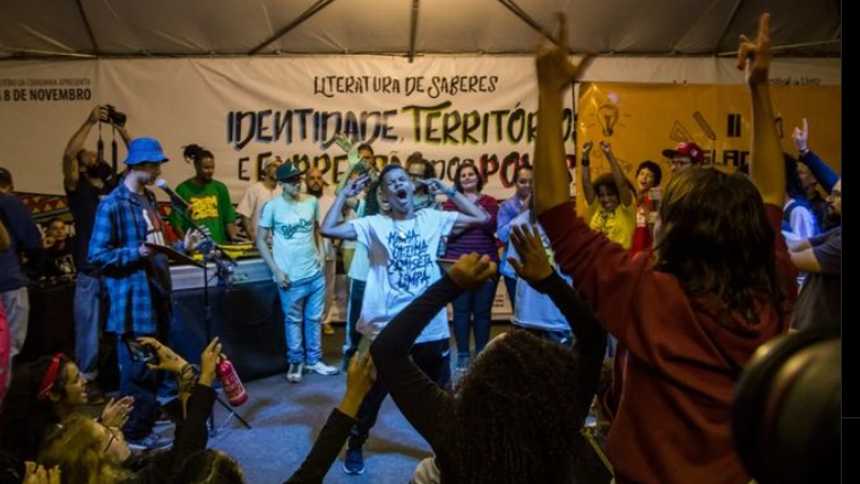
In 2015, writer Emerson Alcalde de Jesus and teacher and actress Cristina Adelina Assunção conceived the Slam Interescolar SP, which six years later received the Jabuti Prize for promoting reading.
The motivation stemmed from a trip Emerson took to represent Brazil in a spoken word poetry competition in France. The São Paulo Inter-School Slam is an annual event open to middle and high school students in the state of São Paulo. Four schools participated in the first edition; this year there were 372.
"Many of the participants are interested in the contest because of the oral aspect, but they discover that, first, it's necessary to write," Emerson tells NeoFeed . "Since most come from schools in the outskirts of the city, they realize they have difficulty with writing and reading. That's where the teachers come in, guiding the students to read. And they begin to dedicate themselves to reading and writing to improve their poetry and their performance."
Indigenous letters
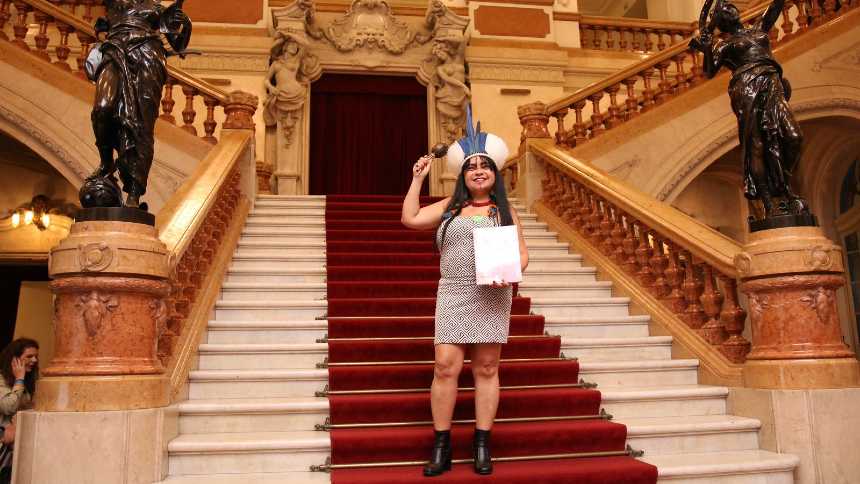
To give visibility and guarantee the expression of indigenous peoples, the writer and art teacher Eva Potiguara, belonging to the Potiguara Sagi Jacu people of Baía Formosa, in Rio Grande do Norte, created the Mulherio das Letras Indígenas project in 2020.
The group, made up of about 60 writers from different ethnicities and regions of the country, produced the book Biographical Album Warriors of Ancestry , winner of the 2023 Jabuti Prize for promoting reading. The distribution of nearly a thousand copies was free, and the e-book version of the work can also be downloaded from the internet, also free of charge.
Through personal stories, written in the form of short stories, poems, and chronicles, Eva finds fulfillment in spreading knowledge about the struggles of indigenous peoples.
“The book shows that there is cultural diversity among indigenous peoples, although they all share the suffering caused by colonization, which still hurts us because there are lands that need to be demarcated and we are victims of various types of invasions,” Potiguara explains to NeoFeed .
"Books are alive"
Beyond the awards, there are many other equally recognized projects. The Literary Ballad, launched in 2006 in São Paulo, is a success story .
Created by Marcelino Freire, from Pernambuco, award-winning author of Nossos ossos and Contos negreiros, among other works, the free literary event promotes classes, shows, book launches and talks with renowned national and international authors, as well as "introducing" new writers.
Held annually, A Balada has expanded its reach to Recife, Salvador, and Teresina.
Freire has also been coordinating creative writing workshops since 2003, where he says he "trains" more readers than writers.
“I’m showing the importance of getting to know other authors, of getting to know the writing of our contemporaries. And many people are already out there, spreading their paragraphs, expanding this great community of reading and writing,” he celebrates, in a conversation with NeoFeed . “Reading is also writing,” he often preaches.
According to Freire, cultivating the habit of reading is fundamentally about showing that books are alive and not boring. "Literature is everywhere. In music, in film, in games, in the streets. We have to take the books off the high shelves and make the words return to the ground," he argues.


Rony Meisler, founder of Reserva and CEO of AR&Co, launched Livraria Diferente on April 23rd, Book Day. In partnership with Skeelo, a digital book platform, he donated 18,000 copies of books that, as he defines them, "had an extremely positive impact" on his life.
Among the titles are Empower Yourself — 100 feminist challenges to recognize your own strength and live better , by Maynara Fanucci, and The brand beyond purpose , by Renato Figueiredo.
Of the total number of books offered by Diferente, 5,000 are for Meisler's followers on social media and 13,000 will go to social institutions linked to the Instituto Claro. "When the 5,000 books run out, the bookstore will close, perhaps to reopen on the same day in 2024," explains Meisler.
Without mastery of the language, it's impossible.
Besides the lack of money, time, and habit, deficient training in the Portuguese language is another major barrier to encouraging reading in Brazil.
Six out of ten Brazilian students finish middle school without a basic command of the Portuguese language, according to the National System for the Evaluation of Basic Education, from the Ministry of Education.
“For those who don’t master the language, it’s much harder for reading to spark interest,” says Elvis Cesar Bonassa, director of Kairós Desenvolvimento Social, a consultancy specializing in public policies, to NeoFeed .
In the article "Reader Formation and Reasons for Literature," writer Ricardo Azevedo raises another important issue: many children have contact with adults—parents, teachers, and others—who recommend reading, but who are not readers themselves. This is worth reflecting on.